
Proofs of Concept Decided by Evidence, Not Optimism
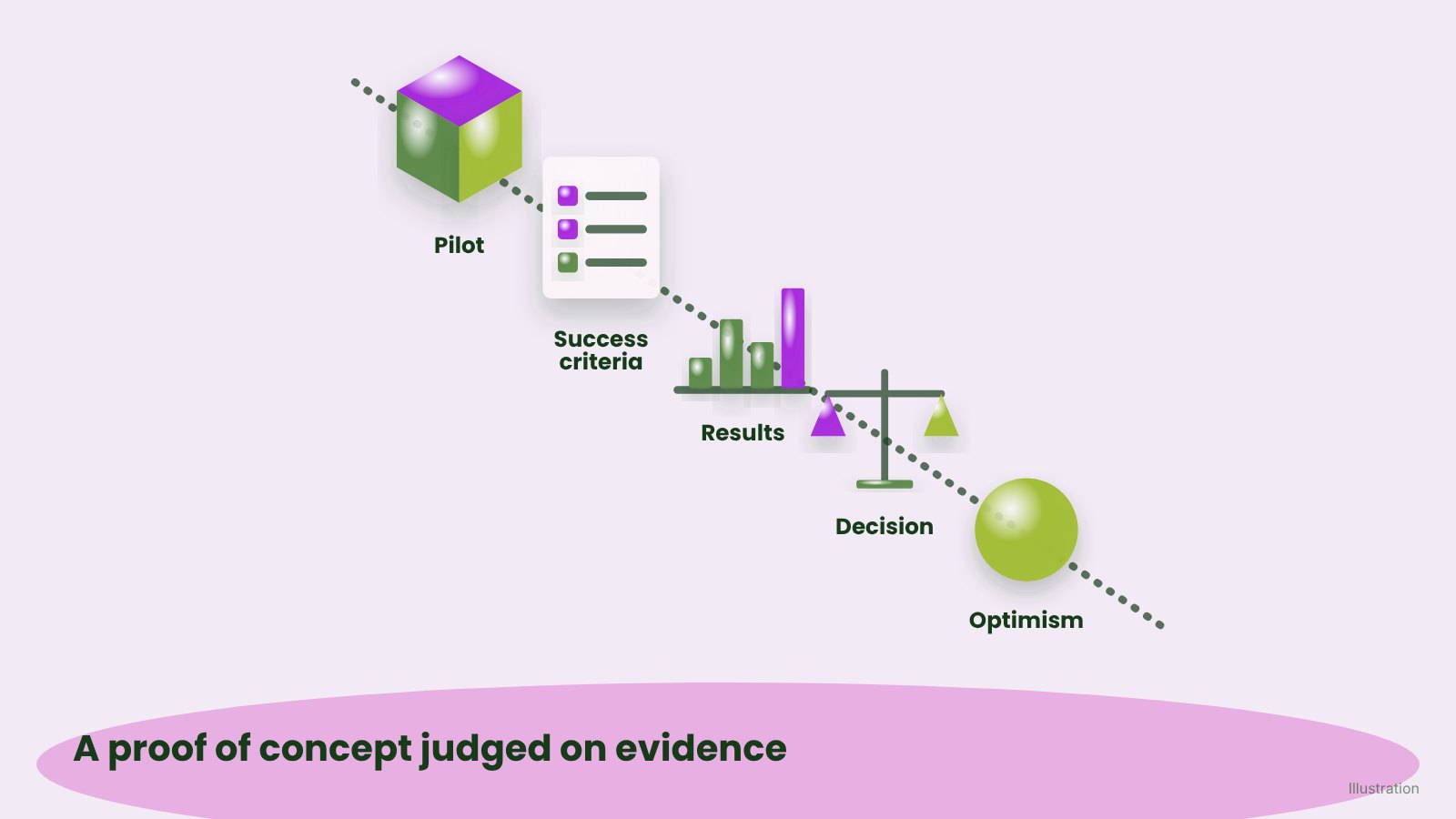
Most proofs of concept fail quietly: the criteria were never written down, or changed halfway, and everyone remembers a different version of “success”. Sales Engineering Intelligence runs PoCs with criteria agreed with the customer before testing starts, evidence behind every result, and an outcome that can’t be better than the evidence.
A software vendor that sells code-protection tools is three weeks into a proof of concept with a bank. At kickoff, everyone agreed the PoC would "show that protection works with their build". The sales engineer, Ahmed, has spent three weeks on it.
In the final meeting, the bank's lead developer says the protected build broke two of their reflection-based plugins. Ahmed says that was out of scope; they'd agreed to test the core application. The developer says nobody agreed that. The bank's security reviewer, who joined halfway through, says she was expecting a reverse-engineering test, which never happened. The sales director, who wasn't there for any of it, has already told his manager the PoC "went well".
Nobody is lying. The criteria were never written down, so each person remembers the version of success that suits them. The deal stalls for two months while everyone argues about what was promised.
Most proofs of concept fail quietly like this, not because the product didn't work, but because nobody agreed in advance what "worked" would mean.
First, the basics
- A proof of concept (PoC) is a trial where a customer tests a product in their own environment before buying.
- A sales engineer (SE) runs the technical side of the sale, including PoCs.
- A criterion is one thing the PoC must show, with how it will be measured. Must-have requirements are things the customer can't buy without.
- Agreement means a named person at the customer has confirmed the criteria before testing starts.
- Evidence is what proves a result: an observation, a link, a test-result file.
- JUnit XML is a common file format for automated test results; it records how many tests ran and passed.
- Met, not met, inconclusive are the possible results for each criterion.
- Outcome is the overall result of the PoC: successful, unsuccessful or inconclusive.
Why does this matter? PoCs are expensive for both sides: weeks of engineering time and a decision that can make or lose a deal. When success is defined up front and decided by evidence, both sides can trust the result, and the conversation moves to buying instead of arguing.
The problem, in plain terms
- Criteria aren't written down, or are written vaguely ("protection works").
- Criteria change halfway as new people join or results disappoint.
- Results are declared, not proven. "It worked" with nothing attached.
- Optimism decides the outcome. Sales reports success before the evidence is in.
- The customer report is a sales document, not a record of what happened.
Agree first
A PoC starts from the product's template or empty, and the opportunity's must-have requirements become criteria straight away. Each criterion says how it will be measured: "same pass rate for the protected and unprotected builds", "a pipeline run produces the protected artefact without manual steps". It's agreed with a named person on the customer's side.
Until every criterion is agreed, the PoC can't move to execution. After that, the criteria are fixed.
Evidence behind every result
During execution you track scenarios, prerequisites and milestones, and add evidence: what was observed, a link, or a file. Files are stored encrypted, and JUnit XML results are counted automatically: 40 tests, 40 passed.
A person decides each criterion: met, not met or inconclusive.
- Met needs evidence attached to that criterion.
- Not met and inconclusive need a note saying what the results showed.
An outcome that follows the evidence
The outcome comes from the must-haves:
- one not met, and the PoC is unsuccessful;
- any undecided or inconclusive, and it's inconclusive;
- all met, and it's successful.
You can record a less favourable outcome with a reason (sometimes the customer's confidence matters more than the checklist), but never a better one than the evidence supports.
Templates for the five starter products
Each starter product has a template of what to test. PreEmptive's, for example, covers:
- protection validation (the protected build passes the functional suite);
- a reverse-engineering check by the customer's reviewer;
- compatibility with reflection and serialisation;
- build-pipeline validation;
- runtime checks where in scope;
- performance against agreed thresholds.
An AI plan can suggest more criteria (still to be agreed) and configuration steps, kept only when they cite approved product knowledge.
A report the customer can trust
The customer report is built from what was recorded: objectives, each criterion's result and note, test counts and the outcome. An optional AI summary cites those results and can't change one. A named approver signs it off before it goes out, and it downloads as Word.
A worked example, start to finish
Here's Ahmed's next PoC, with another bank, run in Sales Engineering Intelligence.
Week 0, Monday. Ahmed opens the opportunity and chooses PoC → Start from the product template. The bank's must-haves become criteria immediately: protection validation, compatibility with reflection-based plugins and build-pipeline validation. The template adds the reverse-engineering check and performance.
Week 0, Tuesday. He writes how each will be measured:
- Protection validation: the protected build passes the full functional suite with the same pass rate as the unprotected build.
- Reflection compatibility: the six named plugins load and pass their tests in the protected build.
- Reverse-engineering check: the bank's security reviewer, Kasia, can't recover the licence-check logic in four hours with her usual tools.
- Build pipeline: a pipeline run produces the protected artefact without manual steps.
- Performance: start-up time within 5% of the unprotected build.
Week 0, Thursday. In a 30-minute call, the bank's lead developer and Kasia go through the list. Kasia asks to add "string encryption on configuration secrets" as a must-have. Ahmed adds it. Ahmed chooses Record agreement with the lead developer as the customer stakeholder. The criteria are now fixed.
Week 1. Execution starts. Ahmed tracks prerequisites (sandbox access, the plugin source) and milestones. He uploads the JUnit XML results from the protected build: 412 tests, 412 passed, counted automatically. Protection validation: met, with the file attached.
Week 2. Two of the six plugins fail in the protected build. Ahmed adjusts the configuration to exclude their reflection entry points, re-runs, and uploads the new results: all six pass. Reflection compatibility: met, with both results attached and a note.
Week 2, Friday. Kasia spends four hours and can't recover the licence logic. She sends her notes; Ahmed attaches them. Reverse-engineering check: met.
Week 3. Start-up time is 7% slower, not within 5%. Performance: not met, with a note: "7.2% slower start-up; protection of the logging library is the main cost."
Week 3, Thursday. Because a must-have (performance) is not met, the outcome is unsuccessful. The sales director wants to record "successful" because the bank is happy. He can't: the outcome can't be better than the evidence.
Week 3, Friday. Ahmed and the bank agree a short follow-up PoC with the logging library excluded from protection. Its single criterion, start-up within 5%, is agreed before testing. The re-test shows 3.1% slower, recorded as met with the results attached, and the follow-up is successful.
Week 4. Ahmed drafts the customer report from the recorded results, with an AI summary that cites them. His manager, the named approver, signs it off. It downloads as Word, and the bank's procurement team uses it in their decision.
Five more real-world scenarios
1. Starting before agreement
Situation. The customer wants to start testing before reviewing the criteria.
How TR handles it. The PoC can't move to execution until every criterion is agreed with a named person.
2. "Met" with nothing attached
Situation. An SE marks a criterion met after a positive call.
How TR handles it. Met needs evidence attached to that criterion. Without it, it can't be recorded.
3. An inconclusive result
Situation. The customer's test environment went down before the pipeline test finished.
How TR handles it. The criterion is inconclusive, with a note. The PoC's outcome is inconclusive until it's decided.
4. A recording that's more cautious than the checklist
Situation. All criteria are met, but the customer's architect still has doubts.
How TR handles it. The SE can record a less favourable outcome with a reason. Never a better one.
5. An AI-suggested criterion
Situation. The AI plan suggests testing serialisation of a specific framework.
How TR handles it. It's kept only if it cites approved product knowledge, and it still has to be agreed with the customer.
Before and after
Before. Vague criteria, changed halfway, results declared without evidence and an outcome decided by optimism.
After. Criteria agreed with a named customer contact before testing, fixed after that, every "met" backed by evidence, an outcome that follows the must-haves, and a report built from what was recorded.
How to tell it's working
- No PoC starts without agreed criteria.
- Every "met" has evidence, and test counts come from result files.
- Outcomes match the evidence, and less favourable outcomes have reasons.
- Customer reports are approved before they go out.
Who it's for
- Sales engineers who run PoCs and want clear, defensible results.
- Sales leaders who need honest forecasts from PoC outcomes.
- Customers' technical teams, who get a fair test and a report they can trust.
How it fits with the rest of TicketResolve
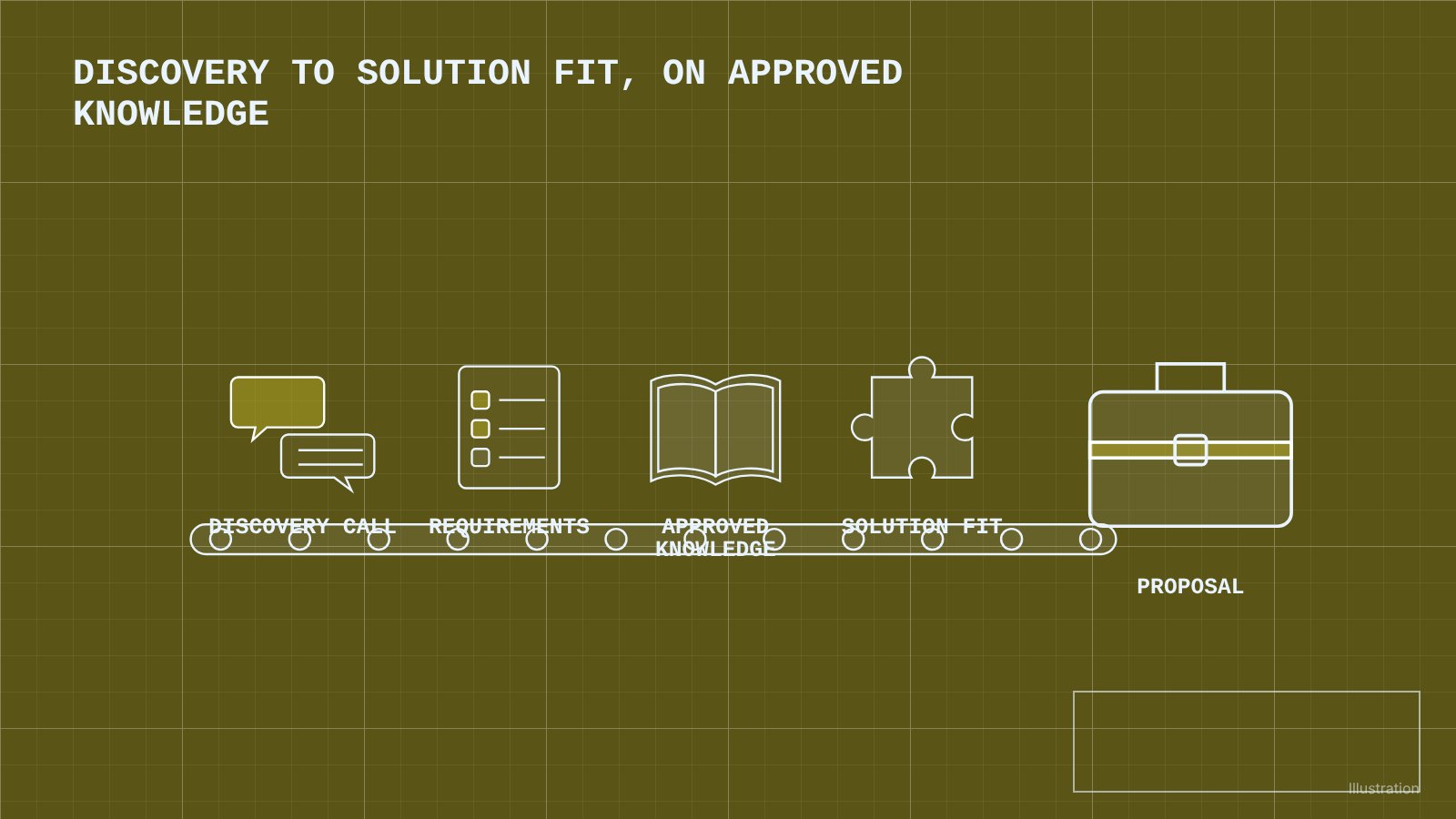
PoCs come from opportunities and their requirements in Sales Engineering Intelligence, after discovery, solution fit and demos. Results feed win/loss analytics and, when a deal is won, the hand-off to delivery. Next came the last phase: RFPs and security questionnaires, CRM sync, hand-offs and product feedback.
Mistakes to avoid
- Vague measures. "Works with their build" can't be met or not met. Say what will be compared.
- Agreeing with the wrong person. Record agreement with someone who can speak for the customer.
- Reporting success early. Wait for the evidence.
Do it in TicketResolve, step by step
Where: Sales Engineering → PoCs (/dashboard/sales-engineering/pocs). You'll need: an SE seat, an opportunity with must-have requirements, and a named approver for the report. Full guide: Running a proof of concept.
- Start the PoC. Opportunity → PoC → Start from the product template. Must-have requirements become criteria to agree.
- Write each measure. Make sure every criterion says how it will be measured.
- Agree the criteria. Check each has a measure, then Record agreement with the customer stakeholder who agreed them. Execution can't start before this.
- Run it and collect evidence. Track scenarios, prerequisites and milestones. Add evidence for each criterion: notes, links or files such as JUnit XML results.
- Decide each criterion. Record met, not met or inconclusive with what the results showed. Met needs evidence attached.
- Close and report. Close the PoC with the outcome the must-haves show, draft the customer report from the results and send it to a named approver.
How to check it worked: the PoC record shows who agreed the criteria and when, evidence on every met criterion, and an outcome no better than the evidence.
Frequently asked questions
Can criteria change after agreement? No. After agreement, they're fixed.
Can a criterion be met without evidence? No. Met needs evidence attached to that criterion.
How is the outcome decided? From the must-haves: one not met is unsuccessful, any undecided or inconclusive is inconclusive, all met is successful.
Can I record a better outcome than the evidence? No. Only a less favourable one, with a reason.
How are test results counted? JUnit XML files are counted automatically.
Are evidence files secure? Yes. They're stored encrypted.
Can the AI change a result in the report? No. The AI summary cites the results and can't change one.
Who signs off the report? A named approver, before it goes out.
Explore Topics
Written by
Ghulam Shabbir
Content creator and writer sharing insights and stories.