
One Investigation, One Answer: Root Cause, Evidence and Verification Without Contradictions
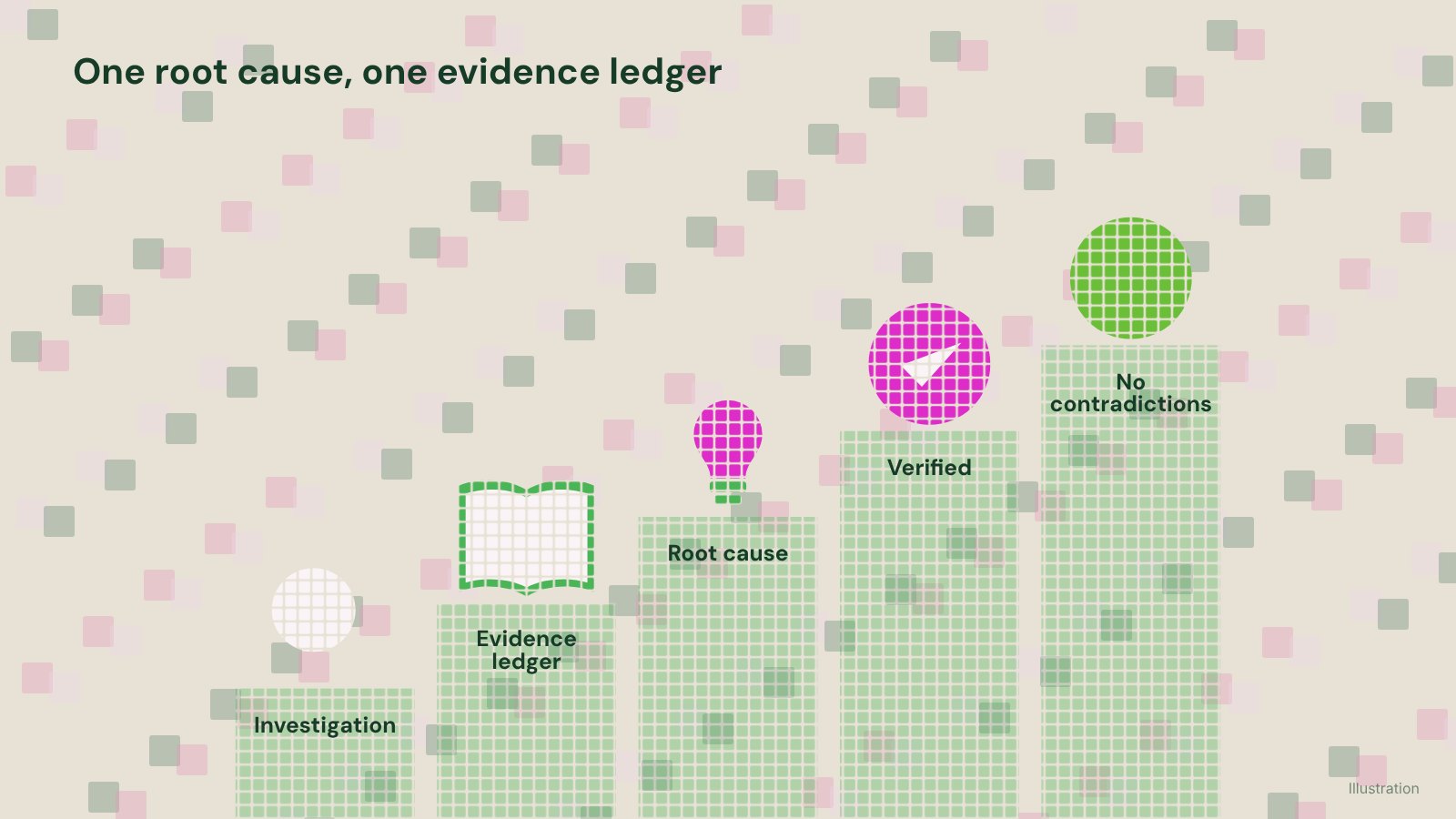
When two parts of a product disagree about whether a cause is confirmed, people stop trusting both. TicketResolve keeps one root cause, one evidence ledger with the kind of statement, source, freshness and environment of every item, and one record of whether the fix worked.
TicketResolve's investigation features grew one at a time over many releases: specialist agents that gather evidence, a root-cause engine that tests competing hypotheses, telemetry checks after a fix, and post-deployment verification. Each was careful on its own.
When we reviewed them together, we found places where they didn't agree.
Here's what that could look like for a support lead. She opens an investigation about failed CSV imports. The Findings tab says the cause, "database connection pool exhausted", is confirmed: an engineer confirmed it yesterday. She opens the root-cause view: the same cause is listed as open, at 64%. The verification panel says the fix passed telemetry checks. Technical memory says nothing about it; a later deployment had failed verification, but that never reached memory as a failed fix.
Three panels, three answers. Which does she tell the customer?
First, the basics
- An investigation is TicketResolve's structured look at a technical ticket.
- The root-cause engine keeps competing hypotheses (possible causes) with probabilities.
- The Findings tab is where people confirm or rule out possible causes.
- A single source of truth means one place decides, and everything else reads from it.
- Evidence is anything that supports or contradicts a hypothesis. A fact is a stored record; a measurement was taken by a system; a report is something someone said.
- Fresh evidence is recent enough to rely on; telemetry goes stale after 24 hours.
- Verification checks whether a fix worked. Independent verification rests on telemetry, a reproduction or tests, not on someone saying it's fixed.
- Technical memory stores past resolutions so future investigations learn from them.
Why does this matter? An investigation is only useful if people trust it. When two panels disagree, people stop trusting both and go back to asking around. One root cause, one ledger and one verification record mean every page gives the same answer.
What we found
- Two places to confirm a cause. The possible causes on the Findings tab and the hypotheses in the root-cause engine were confirmed separately. Confirm a database problem in one, and the other still showed it as open. Some pages read one, some the other.
- Four places that recorded whether a fix worked, two of them with their own outcome categories. A deployment that failed verification never reached technical memory as a failed fix.
- Evidence without context. An error, a deployment and a sentence in a ticket were stored the same way. You couldn't tell a stored fact from what a customer said, or recent telemetry from week-old telemetry.
None of these broke anything on its own. Together, they meant two pages could give two answers about the same investigation.
One root cause
The root-cause engine is now the single source of truth. When someone confirms or rules out a cause on the Findings tab, the engine gets the same decision, and the reverse is also true. If the two places somehow confirmed different causes, the investigation says so plainly and asks a person to settle it. It doesn't pick one.
Confidence is shown one way too: the engine's probability, with a band from "very likely" to "unlikely". A possible cause that the engine hasn't assessed shows its evidence score, clearly labelled as a score, because it isn't a probability.
An evidence ledger
Every piece of evidence now shows:
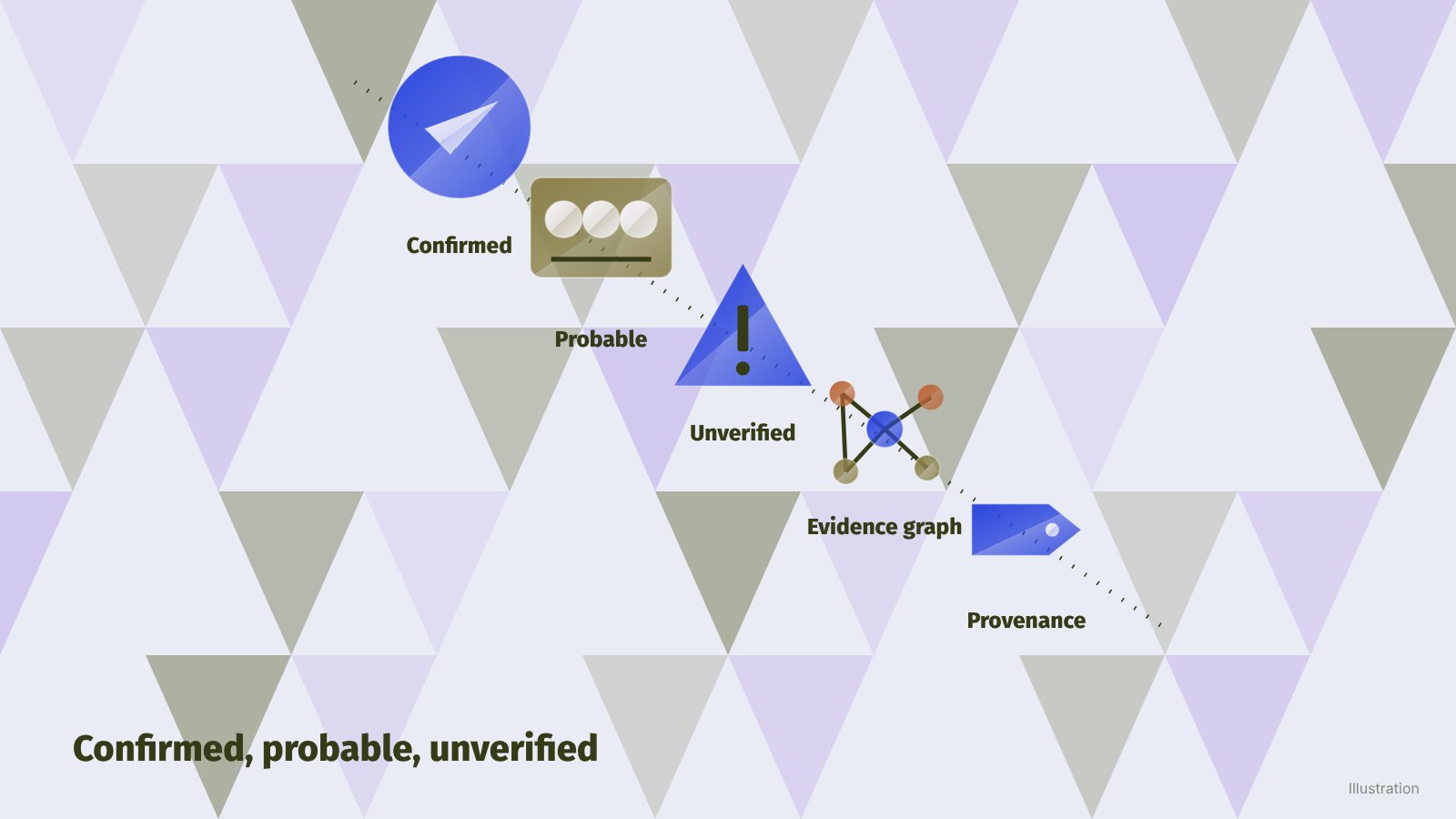
- what kind of statement it is: a fact (a stored record such as a deployment or a known issue), a measurement (taken by TicketResolve or your monitoring tools) or a report (something someone said, including ticket text)
- where it came from, with a reference to the original record
- when it was observed, and whether it's still current (telemetry goes stale after 24 hours)
- the environment and the customer it belongs to
- which hypotheses it supports or contradicts, and why
When a hypothesis has evidence on both sides, it's listed under "contradicting evidence" and left for a person to weigh. The engine never resolves a contradiction by quietly picking a winner.
One verification record
Every check of whether the fix worked now appears together on one scale: telemetry before and after, regression tests from the fix pipeline, and post-deployment verification. The latest settled result counts, so a regression found after deployment overrides an earlier "fixed".
Each check is marked independent when it rests on telemetry, a reproduction or tests, not on someone saying it's fixed. Failed fixes now reach technical memory, so the next investigation learns from them.
Why this came first
We're working through a broader consolidation of TicketResolve's technical intelligence. It continued with a single investigation orchestrator, a service dependency graph and deeper read-only diagnostics. All of it depends on the platform agreeing with itself first.
A worked example, start to finish
Here's the CSV-import investigation again, after the consolidation. The details are illustrative.
Monday, evidence. The ledger shows, for the hypothesis connection pool exhausted:
- Measurement: pool saturation at 100% from 10:02 to 10:40, from Datadog, current (observed 2 hours ago), production, all customers. Supports.
- Fact: a deployment of import-service at 09:55, from the deployment record. Supports (timing).
- Report: the customer's ticket, "imports fail every morning". Supports.
- Measurement: pool saturation normal during this morning's 07:00 import run, from Datadog, current. Contradicts "every morning".
Because there's evidence on both sides, the hypothesis is listed under contradicting evidence for a person to weigh.
Monday 14:00, confirm. The engineer, Aisha, reads both sides: the 07:00 imports were small; the failures are on large files. She confirms connection pool exhausted on the Findings tab. The root-cause engine gets the same decision. Both show confirmed. Confidence is shown one way: the engine's probability, very likely.
Tuesday, fix and verification. A fix ships (bounded import batches). The verification record:
- Telemetry before and after: pool saturation peaks at 60% (was 100%). Independent.
- Regression tests from the fix pipeline: pass. Independent.
- Post-deployment verification: pass. Independent.
Result: fixed.
Thursday, a regression. A later deployment reverts the batch size by mistake. Post-deployment verification fails: pool saturation back to 100%. The latest settled result counts: the record now says regression, overriding Tuesday's "fixed". The failed fix reaches technical memory, so the next similar investigation sees it.
Thursday, the support lead. She opens the investigation. Every panel says the same thing: cause confirmed, fix regressed on Thursday, a new fix in progress.
Five more real-world scenarios
1. Two different causes confirmed
Situation. One engineer confirms a cause on the Findings tab while the engine had another confirmed.
How TR handles it. The investigation says so plainly and asks a person to settle it.
2. A cause the engine hasn't assessed
Situation. A possible cause comes from an agent but hasn't been tested.
How TR handles it. It shows its evidence score, labelled as a score, not a probability.
3. Week-old telemetry
Situation. The only telemetry is from last week.
How TR handles it. It's shown as not current; telemetry goes stale after 24 hours.
4. "It's fixed," says someone
Situation. An engineer writes "fixed" in a comment.
How TR handles it. Not independent verification: that needs telemetry, a reproduction or tests.
5. A customer's statement
Situation. The ticket says "this started after your update".
How TR handles it. It's a report, with its source, not a fact.
Before and after
Before. "Confirmed" on one tab, "open" in another, "passed" in a third, and a failed deployment memory never heard about.
After. One root cause decided in one place, evidence labelled as fact, measurement or report with its source and freshness, contradictions left for a person, and one verification record where the latest result counts and failures reach memory.
How to tell it's working
- Every panel agrees on the root cause.
- Contradicting evidence is weighed by people, not hidden.
- Failed fixes appear in technical memory.
What "independent" means for verification
A check is independent when it doesn't depend on anyone's say-so: telemetry before and after, a reproduction that no longer fails, or tests that pass. "The engineer said it's fixed" and "the customer stopped replying" aren't independent. Marking each check this way lets anyone see at a glance whether "fixed" rests on evidence or on someone's word.
Who it's for
- Support leads who report on investigations.
- Engineers who confirm causes.
- Anyone relying on technical memory for the next investigation.
How it fits with the rest of TicketResolve
The consolidation underpins investigations, the root-cause engine, verification, technical memory, the investigation orchestrator, the dependency graph and deeper diagnostics.
Reading the evidence ledger
The three kinds of statement carry different weight. A fact is a stored record, such as a deployment at 09:55, and is as reliable as the system that recorded it. A measurement was taken by a tool and is reliable while it's current. A report is what someone said, including the customer's ticket, and is useful but not proof: customers describe what they saw, not what caused it. Reading the kind before the content keeps a confident sentence in a ticket from outweighing a measurement.
Mistakes to avoid
- Treating reports as facts.
- Relying on stale telemetry.
- Calling a fix verified from someone's word.
Do it in TicketResolve, step by step
Where: the investigation's Findings tab and root-cause view (/dashboard/investigate). You'll need: an investigation with evidence. Full guides: TR Investigate: from a ticket to a verified fix and How the investigation engine works.
- Open the evidence ledger. Read each item's kind, source, time, environment and customer.
- Check freshness; telemetry goes stale after 24 hours.
- Read contradicting evidence and weigh it yourself.
- Confirm or rule out on the Findings tab; the engine gets the same decision.
- Read confidence as the engine's probability and band.
- Read the verification record: telemetry, regression tests, post-deployment verification.
- Check which checks are independent.
How to check it worked: the Findings tab and the root-cause view show the same decision, and the verification record shows the latest settled result.
Frequently asked questions
Where is the root cause decided? In the root-cause engine; the Findings tab and the engine share every decision.
What if they disagree? The investigation says so and asks a person to settle it.
How is confidence shown? As the engine's probability, with a band from very likely to unlikely.
What kinds of evidence are there? Facts, measurements and reports.
When does telemetry go stale? After 24 hours.
Who resolves contradictions? A person. The engine never quietly picks a winner.
Which verification result counts? The latest settled one, so a later regression overrides an earlier "fixed".
Do failed fixes reach memory? Yes, so the next investigation learns from them.
Is an evidence score a probability? No. It's labelled as a score; only the engine's assessed hypotheses show a probability.
Where do I see which hypotheses a piece of evidence supports? On the evidence ledger, next to each item, with the reason.
Explore Topics
Written by
Ghulam Shabbir
Content creator and writer sharing insights and stories.