
From Many Investigators to One Investigation: How TicketResolve Coordinates Its Agents
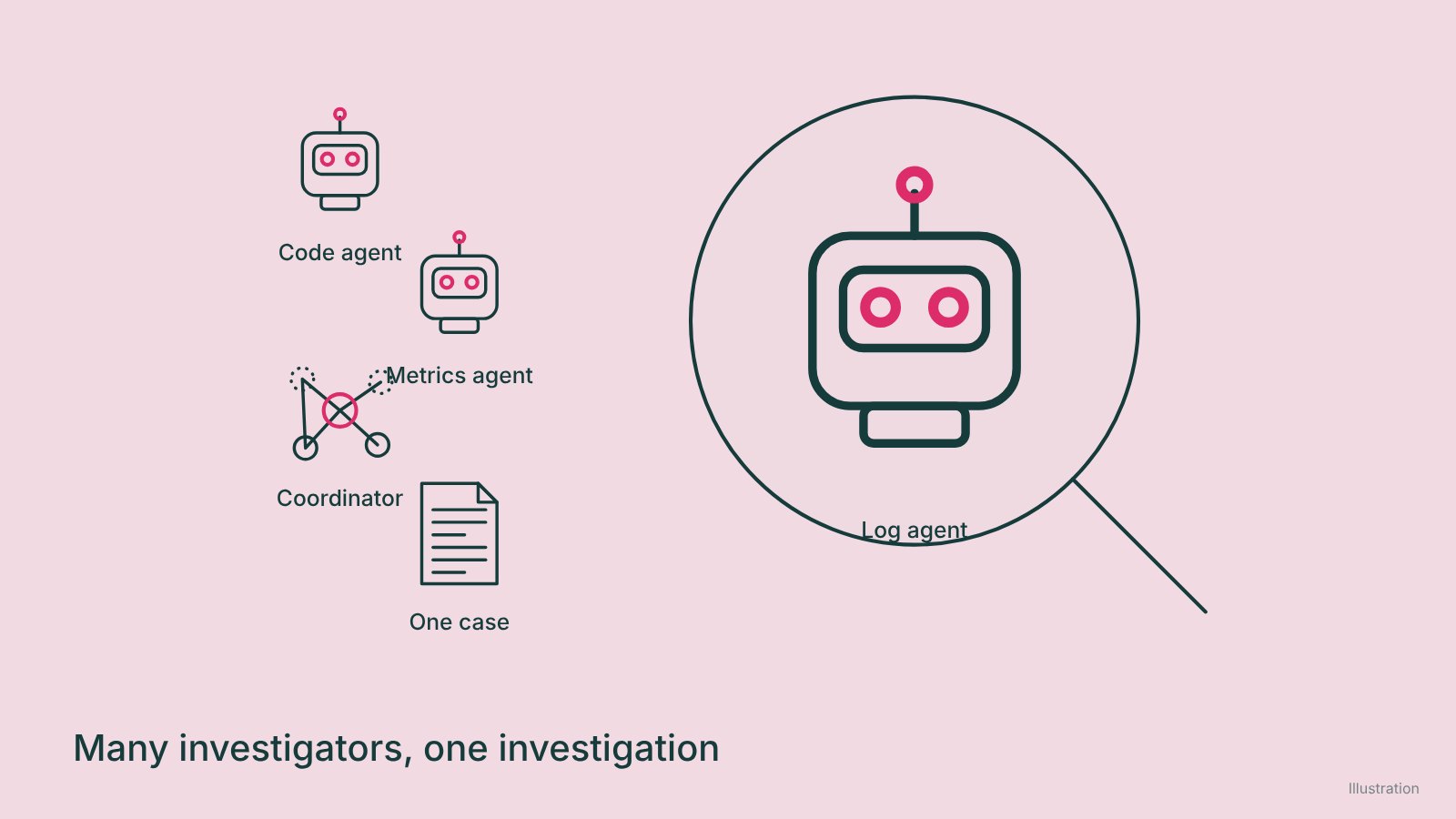
A good investigation isn’t a list of checks; each result changes what you look at next. TicketResolve’s specialist agents gather evidence and its root-cause engine tests hypotheses, and they now work as one investigation: shared evidence, parallel diagnostics where it’s safe, recovery after an interruption, visible disagreement and one timeline.
A good investigation isn't a list of checks. It's a sequence where each result changes what you look at next.
Think about how a senior engineer investigates a customer's error. She reads the ticket, checks the logs, notices a deploy an hour earlier, checks whether the error started then, sees it didn't, looks at the API instead, finds a failing third party, and stops. Each step decided the next one.
TicketResolve had two pieces that did half of this each:
- Investigation agents. Intake, telemetry, API, environment, deployments, knowledge, synthesis and a remediation advisor gather evidence in parallel, from a durable task list that survives restarts.
- The root-cause engine. It keeps competing hypotheses and picks the diagnostic that best separates them, then the next one, until one explanation is strongly supported or a person needs to step in.
They ran side by side, but the engine only looked at the ticket text, errors and log matches. It didn't see what the API, environment or deployment agents had found.
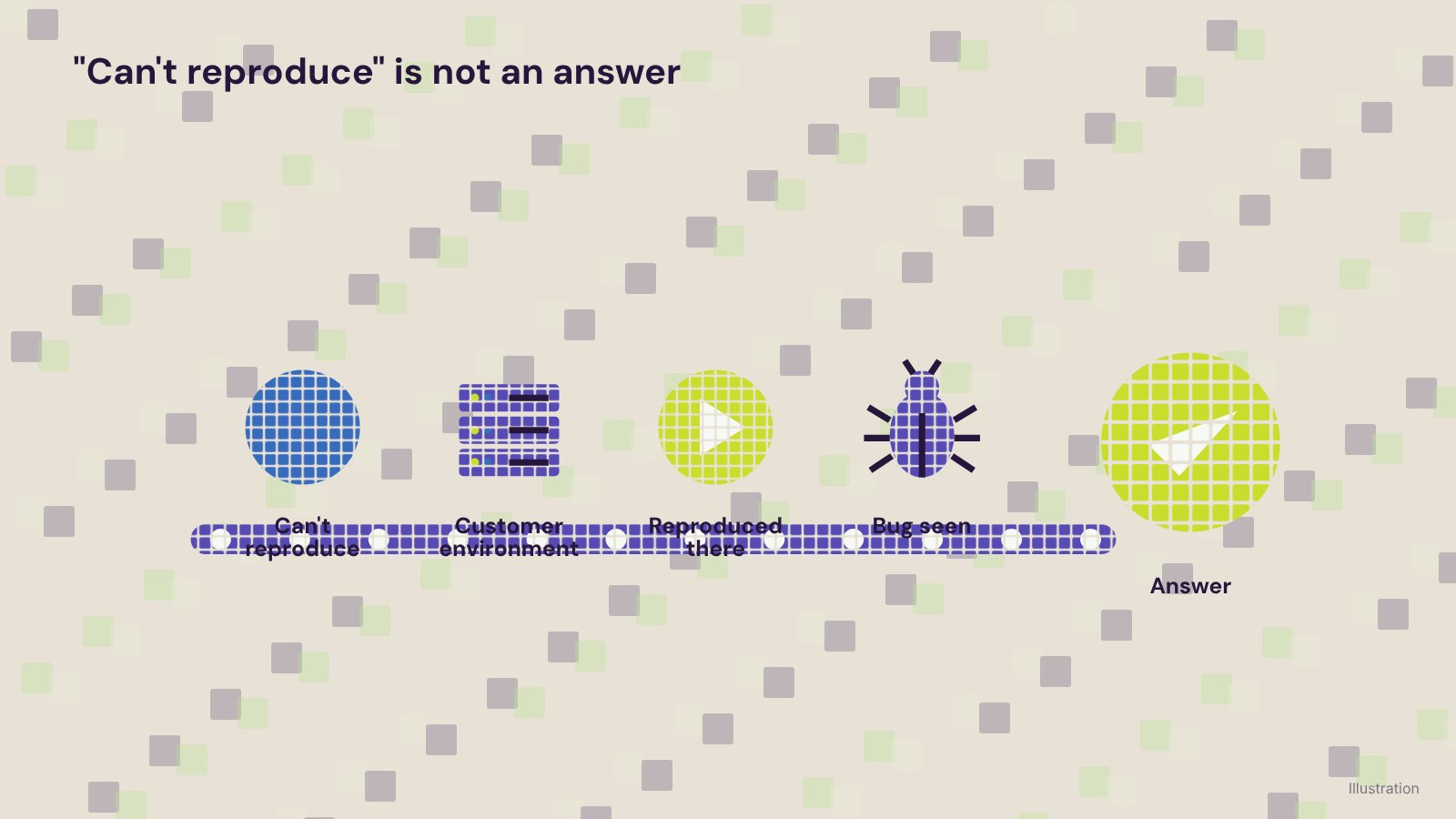
Here's what that meant in practice at a payroll software company. A customer reported that payslip downloads failed. The API agent found the PDF service returning 503 for that customer's requests. The deployment agent found a release of the PDF service 40 minutes before the first error. But the root-cause engine, starting from the ticket text ("downloads fail"), led with a client-side hypothesis and spent its first diagnostics checking browser errors. The evidence pointing at the PDF service was sitting one panel over.
First, the basics
- An investigation is TicketResolve's structured look at a technical ticket.
- Agents are specialists that gather one kind of evidence: intake, telemetry, API, environment, deployments, knowledge. Synthesis correlates their findings; the remediation advisor suggests next steps.
- The root-cause engine keeps competing hypotheses (possible causes) with probabilities, and runs diagnostics (read-only checks) to move them.
- A durable task list survives restarts: finished work is saved as it finishes.
- Independent diagnostics test different things, so one result can't change the value of another.
- Partial means an investigation couldn't finish, and says what's missing.
- The evidence ledger records every piece of evidence with its source. Inferred evidence comes from reasoning, not direct observation.
Why does this matter? Evidence that doesn't reach the reasoning is wasted, and reasoning that ignores evidence goes down the wrong path first. Joining the two, so every finding shapes the next step, gets to the cause faster and shows the whole path.
The problem, in plain terms
- Agents and the engine worked side by side, not together.
- The engine started from the ticket text only.
- Running everything at once throws away what makes sequencing useful.
- Restarts could cost finished work.
- Disagreements between agents were quietly resolved.
One investigation
The root-cause engine is now a stage of the agents. Once the agents have gathered evidence and the synthesis step has correlated it, the engine starts from all of it. The agents' possible causes join its competing hypotheses, each with a starting weight based on how strong its evidence was. From there, the engine does what it was built for: pick the most informative diagnostic, run it, update the probabilities, and choose again.
If the engine can't finish because a source is down or its time budget runs out, the investigation is marked partial and says what's missing. Nothing pretends to be complete.
Faster, without changing the answer
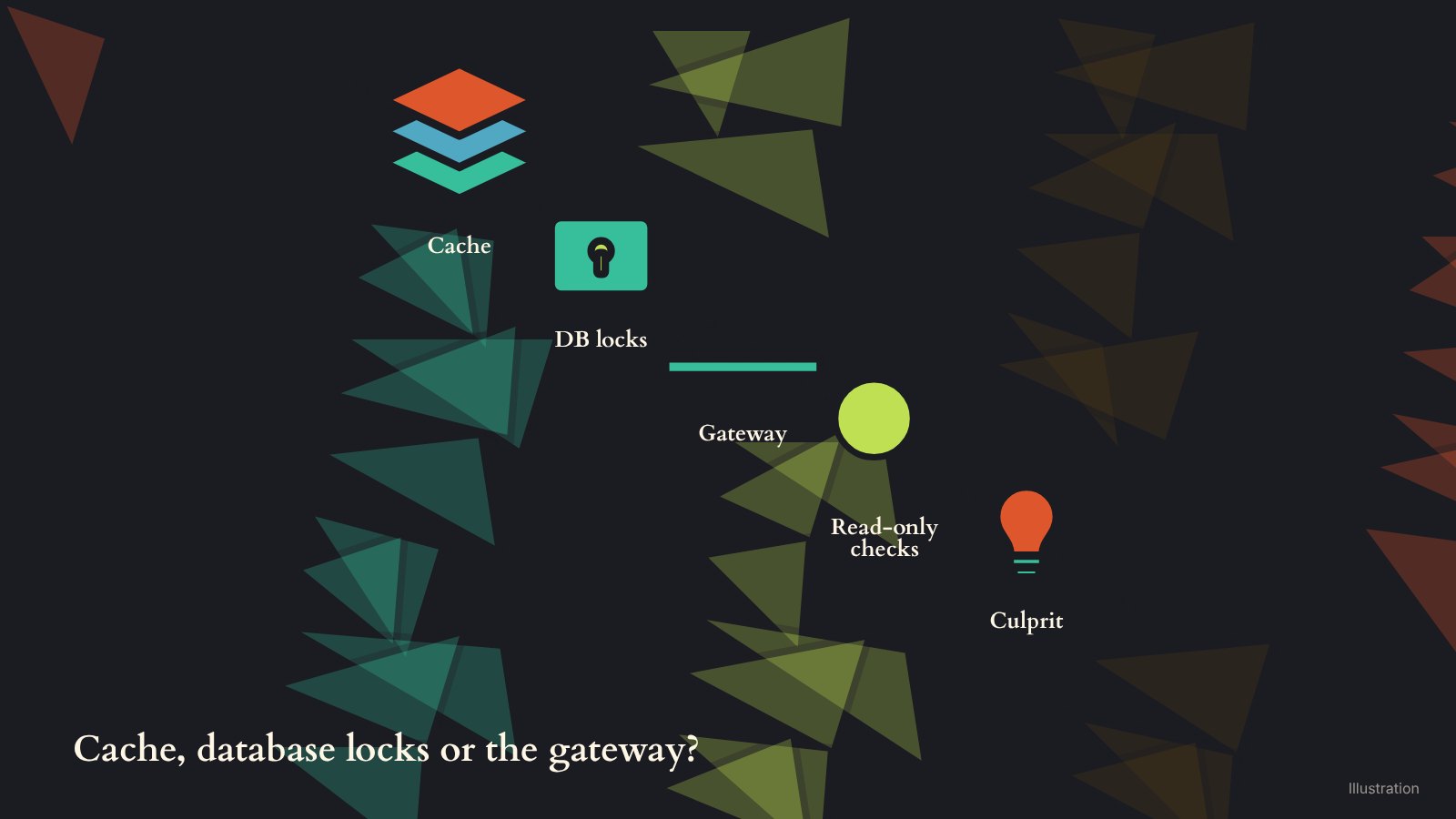
Diagnostics are read-only queries over your telemetry, deployments, configuration and history, so several can safely run at once. But running everything in parallel would throw away what makes the engine useful: each result changes what's worth testing next.
So the engine runs diagnostics together only when they're independent and they're the ones it would run next anyway:
- they're read-only (endpoint checks still need approval)
- they're nearly as informative as the next planned diagnostic
- they test different hypotheses, so one result can't change the value of another
We checked that on our root-cause test cases, the engine reaches the same conclusions this way, in less time.
Interruptions don't cost work
Deploys and restarts happen in the middle of investigations. Every agent task and every diagnostic is saved as it finishes. When an investigation resumes:
- finished tasks and diagnostics are kept, not repeated
- a diagnostic cut off mid-run is run again, because its result never reached the hypotheses
- the resume itself is recorded in the timeline
Disagreement stays visible
Sometimes two agents see different things. Telemetry shows errors rising while the deployment agent finds no release in the window. Those disagreements now go into the evidence ledger as inferred evidence, next to the root-cause engine's own contradicting results. They're shown to you, not quietly resolved.
One timeline
The Engineering tab's timeline now lists, in order:
- every agent task
- every root-cause step and diagnostic
- every approval request and decision
- every lifecycle step, from the ticket to verification
If you want to know why TicketResolve thinks something, you can follow the whole path.
A worked example, start to finish
Here's the payslip-download ticket, with one investigation. The details are illustrative.
10:00, agents. In parallel:
- Intake: payslip downloads fail, since about 09:15.
- API:
GET /api/payslips/:id/pdf → 503for this customer's requests. - Deployments: a release of pdf-service at 08:35.
- Telemetry: pdf-service error rate rising from 09:12.
- Environment: the customer's browser and network look normal.
- Knowledge: no known issue.
10:02, synthesis. Correlates: 503s from pdf-service, starting 37 minutes after its release.
10:02, the engine starts from all of it. Hypotheses with starting weights from the evidence: pdf-service regression (strong: API and deployment evidence), upstream dependency of pdf-service (medium), client-side (weak: environment looks normal).
10:03, parallel diagnostics. The next planned diagnostic is compare pdf-service before and after the release. Two others are nearly as informative and test different hypotheses: failing dependencies of pdf-service and Kubernetes events for pdf-service. All three are read-only and independent, so they run together.
10:04, results. Error rate jumped after the release (supports regression). No failing dependencies (counts against upstream). Kubernetes: pods failing health probes since 09:12, with an out-of-memory warning. pdf-service regression strongly supported; the probe failures point to memory.
10:05, a restart. TicketResolve itself deploys. The investigation resumes: finished tasks and diagnostics kept; one diagnostic cut off mid-run (memory trend for pdf-service) is run again; the resume is recorded.
10:07, a disagreement. Telemetry also shows errors on invoice-service rising from 09:20, while the deployment agent found no release of invoice-service in the window. It goes into the evidence ledger as inferred evidence, shown to the engineer: invoice-service calls pdf-service, so it's probably a consequence.
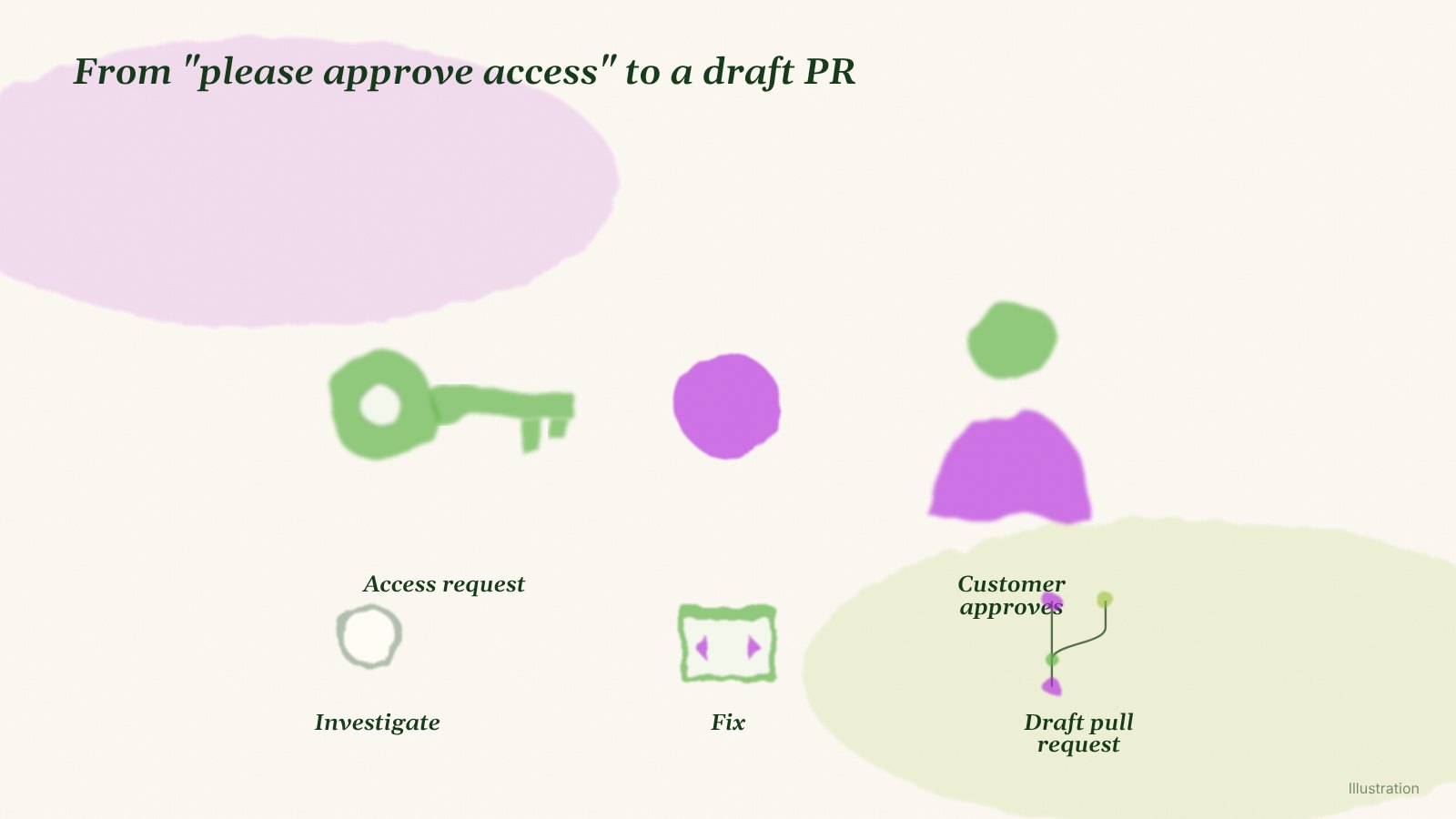
10:10, the timeline. The engineer reads, in order: every agent task, every diagnostic, the parallel batch, the resume, the disagreement. She confirms the cause: the release raised PDF image resolution, and pods run out of memory. She requests a rollback; it's approved; downloads work by 10:30.
Five more real-world scenarios
1. A source is down
Situation. The telemetry source times out.
How TR handles it. The investigation is marked partial and says what's missing.
2. An endpoint check
Situation. The next useful diagnostic calls the customer's endpoint.
How TR handles it. It still needs approval, so it isn't run in a parallel batch on its own.
3. Dependent diagnostics
Situation. Two diagnostics test the same hypothesis.
How TR handles it. They're not run together, because one result could change the value of the other.
4. Time budget runs out
Situation. A complex investigation hits its time budget.
How TR handles it. Marked partial, with what's missing. Nothing pretends to be complete.
5. "Why do you think that?"
Situation. A manager asks why the investigation blamed the release.
How TR handles it. The timeline shows every task, diagnostic and decision in order.
Before and after
Before. API and deployment evidence pointing at the PDF service, while the engine started from the ticket text and checked the browser first.
After. The engine starting from every agent's evidence, the strongest hypothesis first, three independent diagnostics in parallel, a restart that cost nothing, a disagreement shown rather than hidden, and one timeline from ticket to fix.
How to tell it's working
- Leading hypotheses match the agents' strongest evidence.
- Investigations finish faster with the same conclusions.
- Partial investigations say what's missing.
Who it's for
- Engineers who read investigations.
- Support engineers who escalate them.
- Engineering leads who want to know why a conclusion was reached.
How it fits with the rest of TicketResolve
This joins the investigation agents and the root-cause engine in TR Investigate, using diagnostics, the service dependency graph, the evidence ledger and approvals, through to verification.
Why not just run everything at once?
It's tempting: diagnostics are read-only, so why not run them all? Because the engine's value is in choosing. After each result, some hypotheses fall away and different checks become the useful ones. Running everything means waiting for checks that no longer matter, and burning the time budget on them. Running only independent, nearly-as-useful diagnostics together keeps the sequence's intelligence while saving time where it's safe.
Mistakes to avoid
- Reading a partial investigation as complete.
- Ignoring disagreements in the evidence ledger.
- Confirming a cause without reading its timeline.
Do it in TicketResolve, step by step
Where: the investigation's Engineering tab (/dashboard/investigate). You'll need: telemetry, deployments and other sources connected. Full guides: TR Investigate: from a ticket to a verified fix and How the investigation engine works.
- Open an investigation. Agents gather evidence in parallel.
- Read the synthesis of what they found.
- Read the hypotheses and their starting weights.
- Follow the diagnostics, including any run together.
- Check for "partial" and what's missing.
- Read disagreements in the evidence ledger.
- Follow the timeline from ticket to verification, then confirm the cause.
How to check it worked: the timeline lists every agent task, diagnostic, approval and lifecycle step in order.
Frequently asked questions
Does the engine see the agents' evidence now? Yes. It starts from all of it after synthesis.
How are starting weights set? From how strong each possible cause's evidence was.
When do diagnostics run in parallel? Only when they're read-only, nearly as informative as the next planned one, and test different hypotheses.
Does parallel running change conclusions? On our root-cause test cases, the engine reaches the same conclusions, in less time.
What happens after a restart? Finished work is kept; a cut-off diagnostic is run again; the resume is recorded.
What if it can't finish? It's marked partial and says what's missing.
Are disagreements hidden? No. They go into the evidence ledger as inferred evidence.
Where's the full path? On the Engineering tab's timeline.
Do agents still run in parallel? Yes. They gather evidence in parallel from a durable task list before the engine starts.
Explore Topics
Written by
Ghulam Shabbir
Content creator and writer sharing insights and stories.