
From Customer Ticket to Pull Request — Without Skipping the Engineering Controls
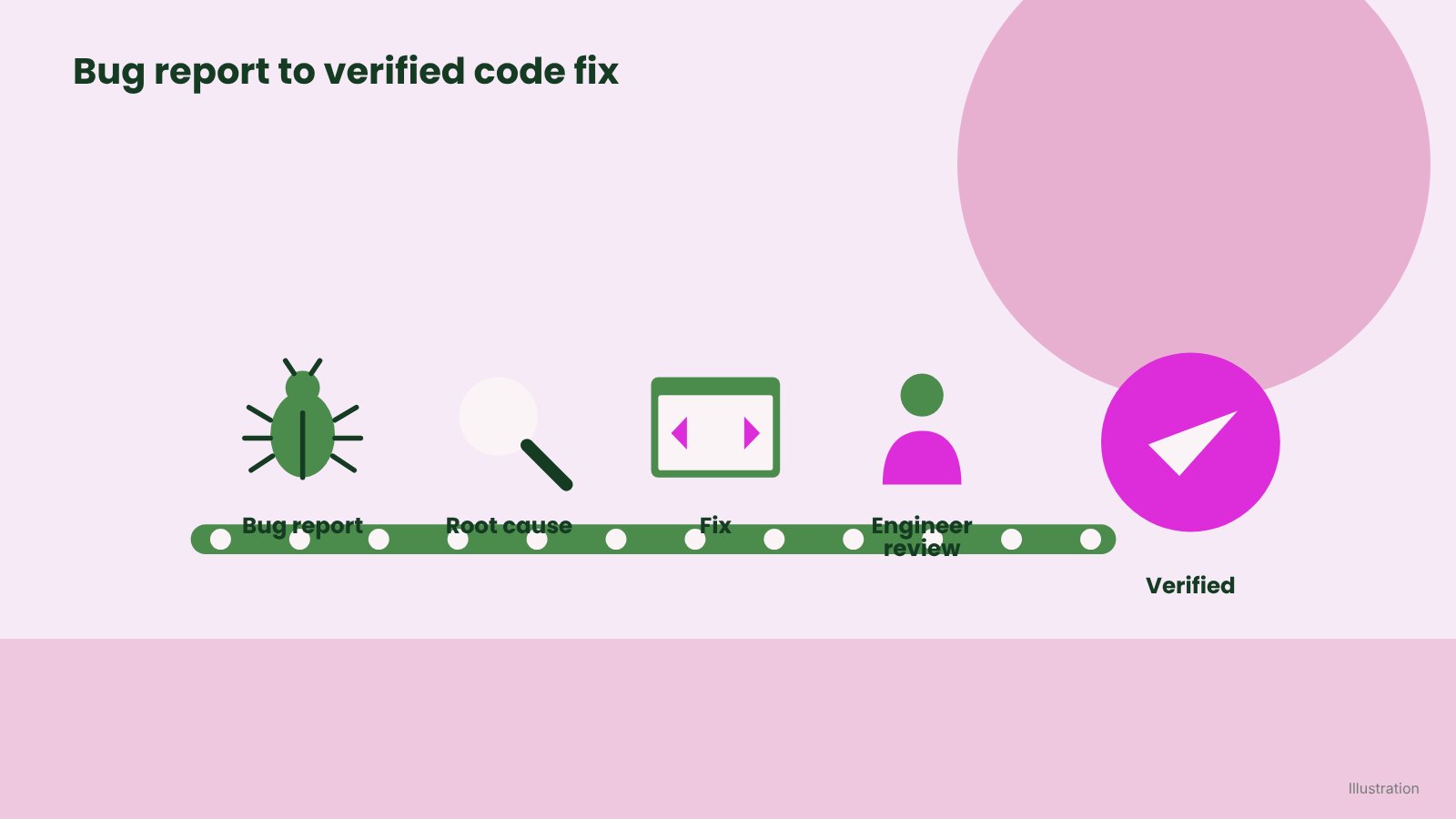
Support can find a root cause in an hour; shipping the fix often takes weeks of hand-offs. TicketResolve 7.0 phase 1 turns a confirmed problem into an engineering task, a reviewed code change with its own regression test, and a targeted test run in your own CI, without ever merging, running your code on shared machines, or acting outside the permissions you grant.
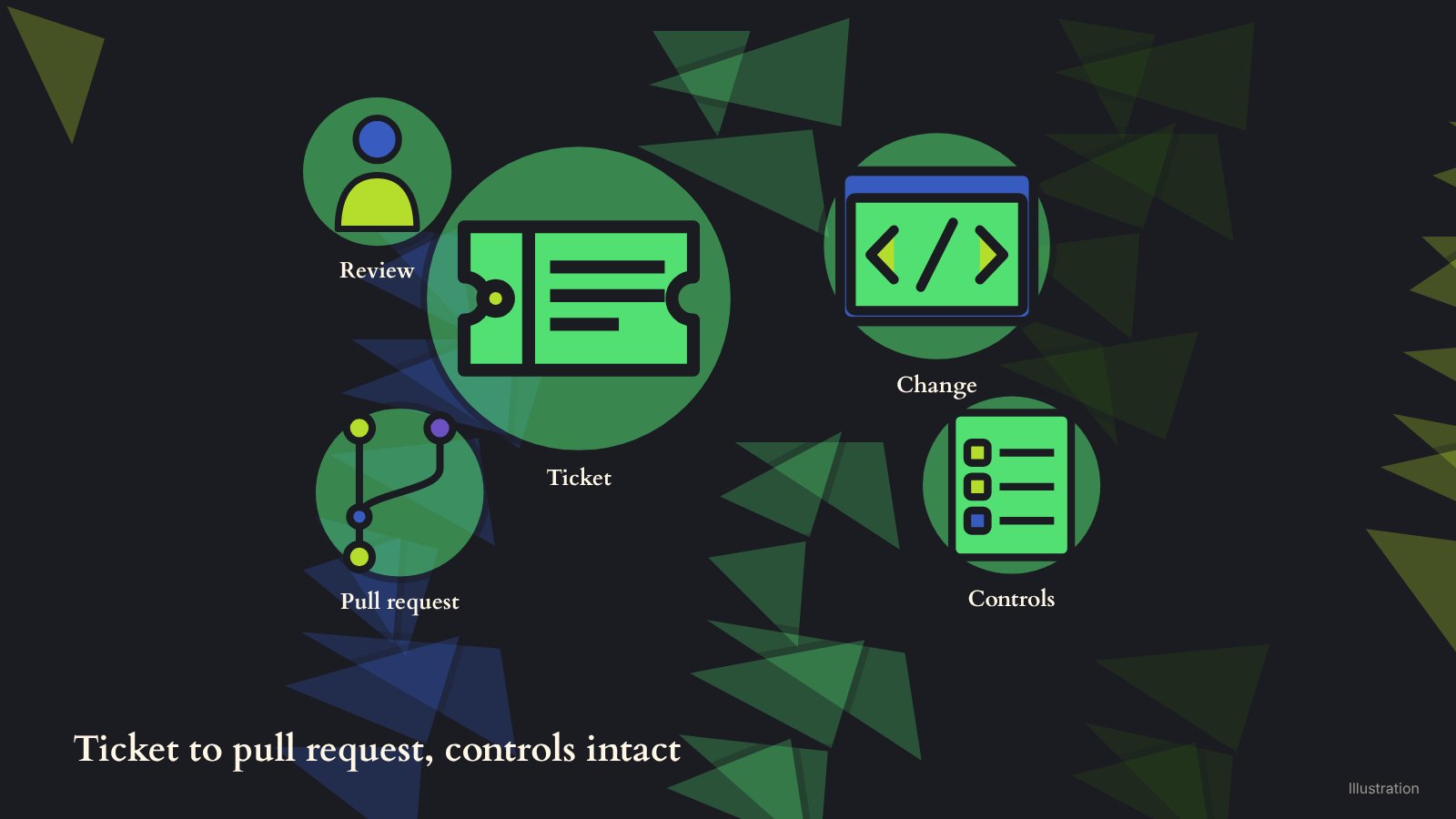
Support can find a root cause in an hour. Shipping a fix for it often takes weeks. The time doesn't go into the code. It goes into hand-offs: rewriting the investigation as a ticket, finding the right files, working out which tests matter, and waiting for someone to notice the ticket again.
The first phase of TicketResolve 7.0 shortens those hand-offs without going around the controls engineering teams depend on.
Here's a typical hand-off at a company selling accounting software. On Monday, support confirms the cause of a customer's problem: currency rounding in the VAT report is wrong for invoices in Japanese yen. By Monday evening:
- Support has written a Jira ticket from memory: "VAT report wrong for JPY."
- An engineer picks it up on Thursday, asks support for the investigation, and spends Friday finding the right file.
- The fix is small: four lines. The engineer runs the full test suite: 70 minutes.
- The pull request waits five days for review.
- A reviewer spots a tab-versus-spaces mismatch and asks for a regression test that wasn't written.
Three weeks for a four-line change. None of the delay was in the code.
First, the basics
- An engineering task is the package engineering receives: the problem, root cause, evidence, code references, reproduction, proposed correction, risk, tests and acceptance criteria.
- Uncertainty is what the evidence doesn't establish.
- A fix proposal is a suggested code change. A regression test checks the bug stays fixed.
- An automated patch review checks a change for problems before a person sees it. A blocking finding stops the pull request unless overridden with a reason.
- A draft pull request is a proposed change waiting for review. Provenance records how it was made.
- A test plan chooses which tests to run. The base branch is the code before the change.
- Engineering governance sets what TicketResolve may do, per repository and environment.
- An emergency stop blocks every engineering action at once.
Why does this matter? The slow parts of fixing a customer's bug are hand-offs, not code. Building the task from the evidence, bringing a reviewed fix with its own test, and running only the tests that matter, all within permissions you set, shortens weeks to days without skipping a control.
The problem, in plain terms
- Investigations are rewritten as tickets from memory.
- Engineers search for the right files.
- Fixes arrive without tests, in the wrong style.
- Full test suites take an hour for a small change.
- Automation tools ask for more access than they should have.
A task, not a forwarded ticket
From an investigation, Build the engineering task gathers what the evidence already shows:
- the customer problem and the confirmed technical symptoms
- the root cause, either confirmed by a person or the leading hypothesis with its probability, plus the evidence for and against it and what was ruled out
- code references from the stack trace and code search, and related recent changes, labelled as leads
- affected components, including the services that call the failing one
- the reproduction, taken from the sandbox, the reproduction lab or the failing API call
- the proposed correction, change risk with safeguards and rollback, required tests and acceptance criteria
No AI writes the task. What the evidence doesn't establish goes into an Uncertainty block at the top. That covers a cause that isn't confirmed, no code location, or no reproduction. A task with open uncertainty only reaches engineering after someone acknowledges it, and engineers see the uncertainty before anything else.
A fix proposal that arrives reviewed
The fix assistant proposes the smallest change that could plausibly fix the problem, in only the files it was given. Three things are new.
It brings a test. The proposal includes a regression test that should fail before the change and pass after it. New files are allowed only in test folders. The assistant also reads an existing test next to the code so the new one follows the repository's conventions.
It passes an automated review first. Before any person looks at it, the patch is checked for:
- edits to files it wasn't given
- oversized or reformat-only changes
- credentials in added lines
- dangerous patterns: shell commands or SQL built from variables,
eval, disabled TLS checks, world-writable permissions, raw HTML - dependency manifest changes
- indentation or quoting that doesn't match the file
- a missing test
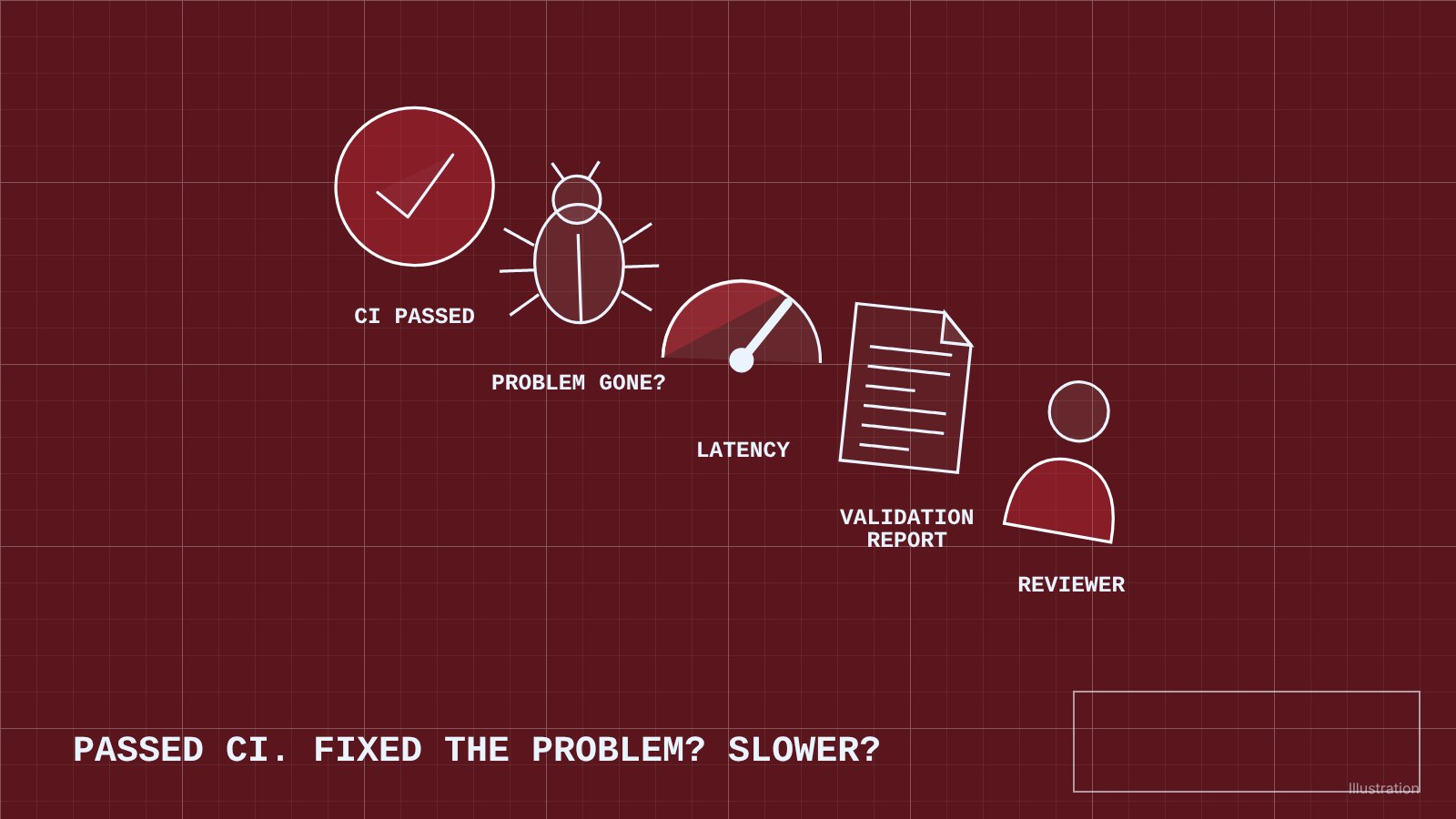
A blocking finding stops the pull request unless a reviewer overrides it with a written reason.
Rejection leads somewhere. Rejecting a proposal needs a reason. The reviewer can then correct the change by hand, which makes no AI call and goes back to someone else for review, or regenerate it. Regeneration is one more AI attempt with the reviewer's reason as guidance, and there are at most two per investigation. Every attempt is kept.
When the change is approved and your policy allows it, TicketResolve opens a draft pull request on a new branch. The description carries the patch review, the test results and the provenance: which file versions it read, a hash of the prompt, which attempt it was, and who approved it. TicketResolve then reads the pull request back every ten minutes, including its state, approvals, change requests and CI checks. It never merges.
Run the tests that matter, in your CI
Running the full suite for a two-line fix wastes an hour. Running too little ships a regression. The test orchestrator builds a plan:
- mandatory release checks, always
- suites whose code paths cover the changed files, suites named after the area or its callers, and security suites when the change touches authentication
- suites that failed before on changes to the same files
- regression tests made from earlier customer bugs in the same area, and API contract checks for operations the change touches
Everything else is skipped, with the reason and the minutes saved.
The tests run in your own CI, on TicketResolve's fix branch: a GitHub Actions workflow_dispatch, a GitLab pipeline or a Bitbucket custom pipeline. Customer code never runs on our infrastructure. When the results come back, they're compared with the base branch. A check that was already failing on main doesn't count against the fix. A check that passes on main and fails on the fix branch is a new failure caused by the change, and the plan says so.
Permissions you set, and a stop button
All of this sits behind engineering governance. Permissions are separate and granted per repository and per environment:
- read is the default
- propose opens draft pull requests
- modify starts CI on TicketResolve's own branches
- deploy is per environment, for release orchestration
Merge can't be granted at all. Allowed base branches limit where pull requests can target, and TicketResolve only ever creates new branches. An emergency stop blocks every engineering action at once. Every action TicketResolve was allowed or refused is in the audit trail.
Bitbucket Cloud joins GitHub and GitLab for all of this: commits, pull requests, code search, draft pull requests, build statuses and pipelines.
A worked example, start to finish
Here's the yen rounding bug, with Phase 1. The details are illustrative.
Monday 11:00, the task. Support presses Build the engineering task. It includes: the customer problem (VAT report totals off by up to ¥1 per line for JPY invoices); the root cause, confirmed by a person (rounding to two decimals for a zero-decimal currency), with evidence for and against; code references from the stack trace and code search: reports/vat.ts:88, money/round.ts; affected components including the two services that call the report; the reproduction from the sandbox; the proposed correction; risk; required tests; acceptance criteria. Uncertainty: none. No AI wrote it.
Monday 11:30, the fix. The fix assistant proposes a four-line change in money/round.ts, plus a regression test, rounds JPY to whole yen, in the test folder, following the style of the existing test next to it.
Automated review: no edits outside given files; small change; no credentials; no dangerous patterns; no manifest changes; indentation matches (spaces, like the file); test present. No blocking findings.
Monday 13:00, review. A senior engineer, Kenta, reviews. He rejects it with a reason: "Also handle KRW, which is zero-decimal too." He chooses regenerate: one more AI attempt with his reason as guidance. Attempt 2 handles both. He approves it. Both attempts are kept.
Monday 13:10, draft pull request. Their policy grants propose for this repository. TicketResolve opens a draft pull request on a new branch, with the patch review, test results and provenance: file versions read, prompt hash, attempt 2, approved by Kenta.
Monday 13:15, test plan. Mandatory release checks; the money and reports suites (they cover the changed files); a regression test from a currency bug last year in the same area. Skipped: 31 other suites, with reasons, saving 58 minutes. The plan runs in their own GitHub Actions via workflow_dispatch, on TicketResolve's branch.
Monday 13:27, results. Compared with main: one check already failing on main (a flaky date test) doesn't count against the fix. No new failures caused by the change.
Monday 13:30 onwards. TicketResolve reads the pull request back every ten minutes. Their reviewers approve it and merge it themselves on Tuesday morning. TicketResolve never merges; merge can't be granted.
Three weeks became a day and a half.
Five more real-world scenarios
1. An unconfirmed cause
Situation. The cause is only the leading hypothesis at 70%.
How TR handles it. It goes in the Uncertainty block; someone must acknowledge it before the task reaches engineering.
2. Credentials in a patch
Situation. A proposed change adds an API key.
How TR handles it. Credentials in added lines are a finding in the automated review.
3. A third regeneration
Situation. A reviewer wants another AI attempt after two.
How TR handles it. At most two regenerations per investigation; correct it by hand instead.
4. A check already failing on main
Situation. A flaky test fails on both branches.
How TR handles it. It doesn't count against the fix.
5. An emergency
Situation. Something goes wrong and the team wants everything stopped.
How TR handles it. The emergency stop blocks every engineering action at once.
Before and after
Before. A ticket from memory, a day finding files, a 70-minute test run, five days waiting for review, and a request for a missing test.
After. A task built from the evidence, a fix with its own test and an automated review, a rejection that led to a better attempt, a draft pull request with provenance, and 12 minutes of targeted tests in their own CI.
How to tell it's working
- Time from root cause to pull request falls.
- Fixes arrive with tests in the repository's style.
- Test runs are shorter, without new regressions.
Who it's for
- Engineers who receive customer bugs.
- Engineering leads who review fixes.
- Support engineers who hand problems over.
How it fits with the rest of TicketResolve
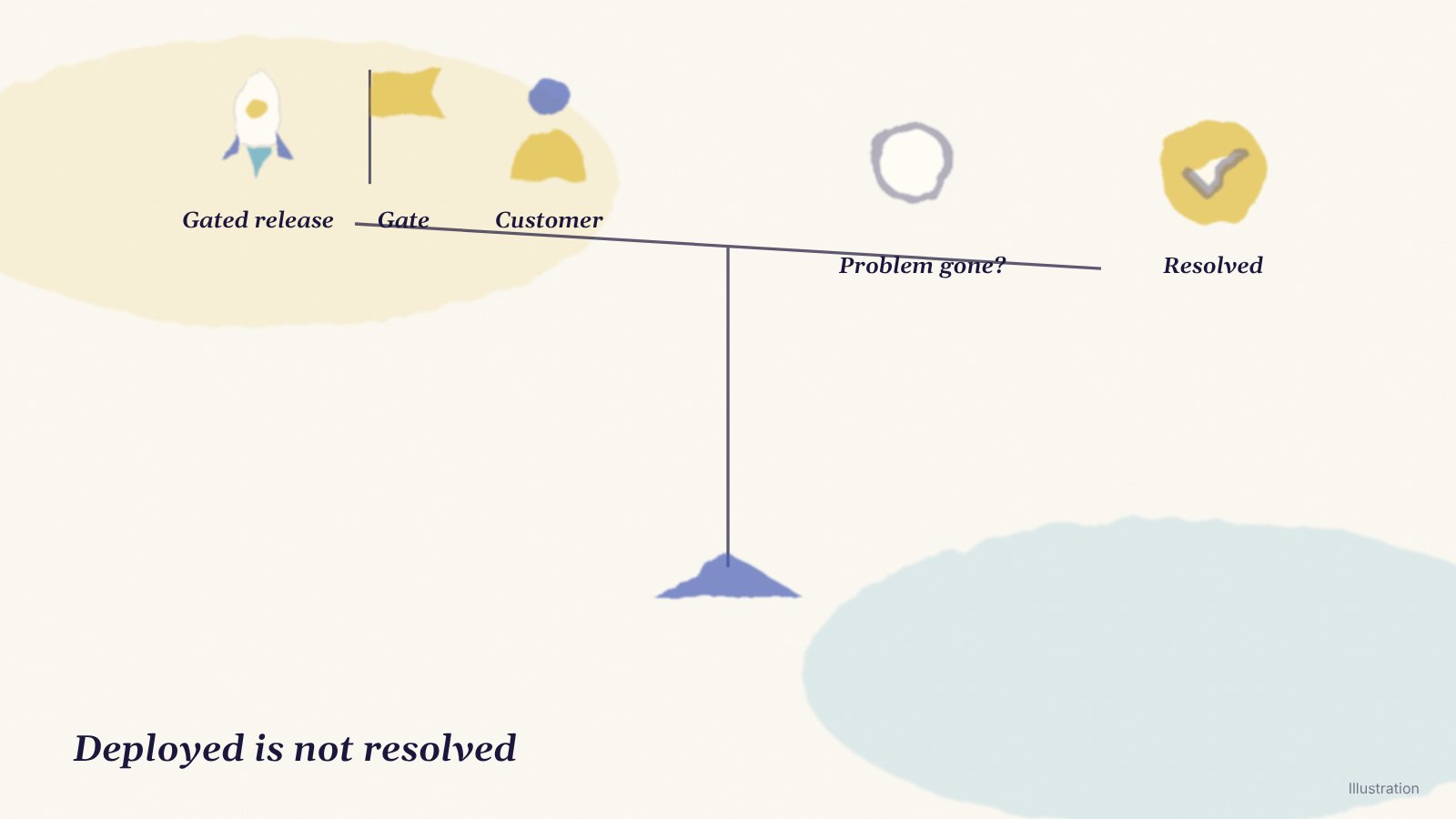
Phase 1 starts from investigations and leads to Phase 2 (change risk, gated release, post-deployment verification) and Phase 3 (regression tests, Execution queue). Everything is governed by engineering governance and recorded in the audit trail.
Mistakes to avoid
- Granting more than you need. Propose and modify are enough for most teams.
- Overriding blocking findings without a real reason.
- Running the full suite out of habit.
Do it in TicketResolve, step by step
Where: the investigation's Engineering tab (/dashboard/investigate). You'll need: GitHub, GitLab or Bitbucket connected; engineering governance permissions per repository; a CI workflow TicketResolve can start. Full guides: TR Investigate: from a ticket to a verified fix and TR Autonomous Engineering.
- Set permissions in engineering governance: read, propose, modify, deploy per repository and environment.
- Build the engineering task from the investigation; acknowledge any uncertainty.
- Request a fix proposal with its regression test.
- Read the automated review and resolve or override findings with reasons.
- Approve, correct by hand, or regenerate (at most twice).
- Open the draft pull request; TicketResolve reads it back every ten minutes.
- Run the test plan in your own CI and read the comparison with the base branch.
- Merge yourselves. Merge can't be granted.
How to check it worked: the draft pull request shows the patch review, test results and provenance, and the test plan lists what ran and what was skipped.
Frequently asked questions
Does AI write the engineering task? No. It's gathered from the evidence.
What's the Uncertainty block? What the evidence doesn't establish; someone must acknowledge it before the task reaches engineering.
Does a fix come with a test? Yes. A regression test that should fail before and pass after.
What does the automated review check? Out-of-scope edits, oversized changes, credentials, dangerous patterns, manifest changes, style mismatches and missing tests.
Can TicketResolve merge? No. Merge can't be granted.
Where do tests run? In your own CI, on TicketResolve's fix branch.
What if a test already fails on main? It doesn't count against the fix.
How do I stop everything? The emergency stop blocks every engineering action at once.
Explore Topics
Written by
Ghulam Shabbir
Content creator and writer sharing insights and stories.