
An AI CFO That Cites Its Figures
A language model will happily tell you your runway, and may even sound confident. The question is where the number came from. AI CFO is complete: an assistant that answers from calculations or cites the figures it uses, monthly reports approved by someone else, what-if scenarios, consolidation across entities, and an investment register.
The founder of a 60-person e-commerce software company has a board meeting on Thursday. On Tuesday night she exports the last twelve months of accounts to a spreadsheet, pastes it into a general AI chat tool, and asks: "What's our runway, and why did operating expenses go up?"
The answer comes back instantly. Runway: 19 months. Operating expenses rose "primarily due to increased marketing spend and new hires in engineering".
On Wednesday, her finance lead checks it. The runway figure used the bank balance from three months ago, not today's. It's 14 months, not 19. Marketing spend actually fell. Operating expenses rose because of a one-off legal bill and a new office lease, neither of which the AI mentioned. The "new hires in engineering" explanation was a guess; payroll wasn't even in the export.
The answer sounded exactly as confident when it was wrong as it would have if it were right. That's the problem.
A language model will happily tell you your runway. The question is where the number came from.
First, the basics
- A CFO (chief financial officer) is responsible for the company's money: accounts, cash, budgets, forecasts and reporting.
- Runway is how many months the cash will last at the current rate of spending. Operating expenses are the costs of running the business.
- Receivables are money customers owe you; payables are money you owe suppliers. Overdue means past its due date.
- Budget variance is the difference between budget and actual.
- An anomaly is an unusual movement worth checking, such as a duplicate payment.
- A citation points to the exact figure that supports a statement.
- A scenario changes some assumptions ("what if we hire five people?") to see the effect.
- A legal entity is a separate company in a group. Consolidation combines their accounts. Intercompany balances are amounts the entities owe each other, which cancel out when combined. Translation converts each entity's figures into the group currency.
- An investment register lists deposits, bonds and funds with their cost, value, rate and maturity.
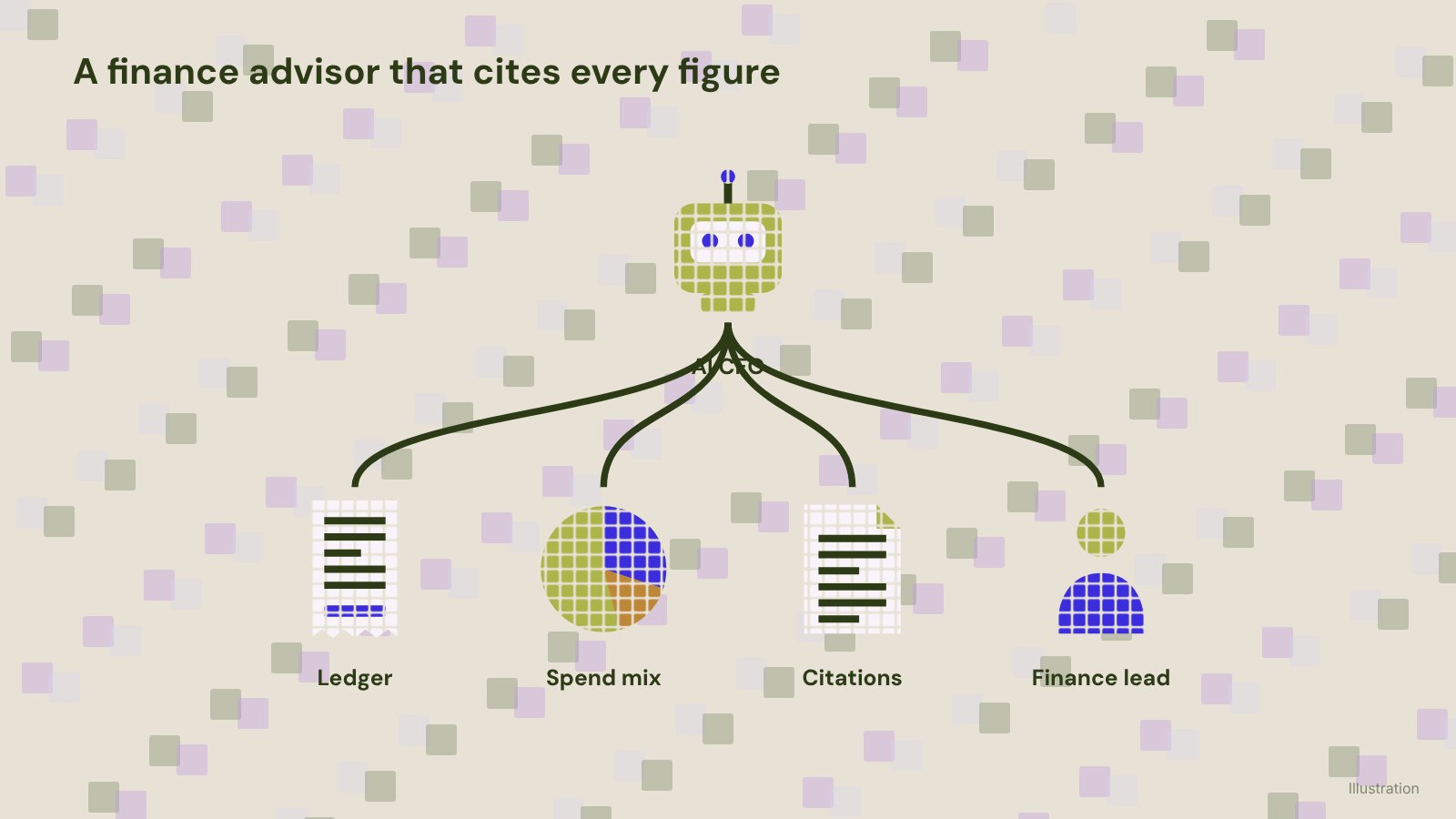
Why does this matter? Finance decisions (hiring, fundraising, cutting costs) rest on a few numbers. An assistant that invents or mis-reads those numbers is dangerous precisely because it sounds sure. One that answers from your actual books, and shows you exactly which figures it used, is something a CFO can put in front of a board.
The problem, in plain terms
- Simple figures get AI answers, when they could be calculated exactly.
- AI explains causes it can't see, such as "new hires" when payroll isn't there.
- Numbers appear with no source.
- Reports are approved by their author.
- "What if" questions are answered in a spreadsheet that's out of date by the next meeting.
- Groups with several entities consolidate by hand, and intercompany balances that don't agree are hidden.
Calculated first, written second
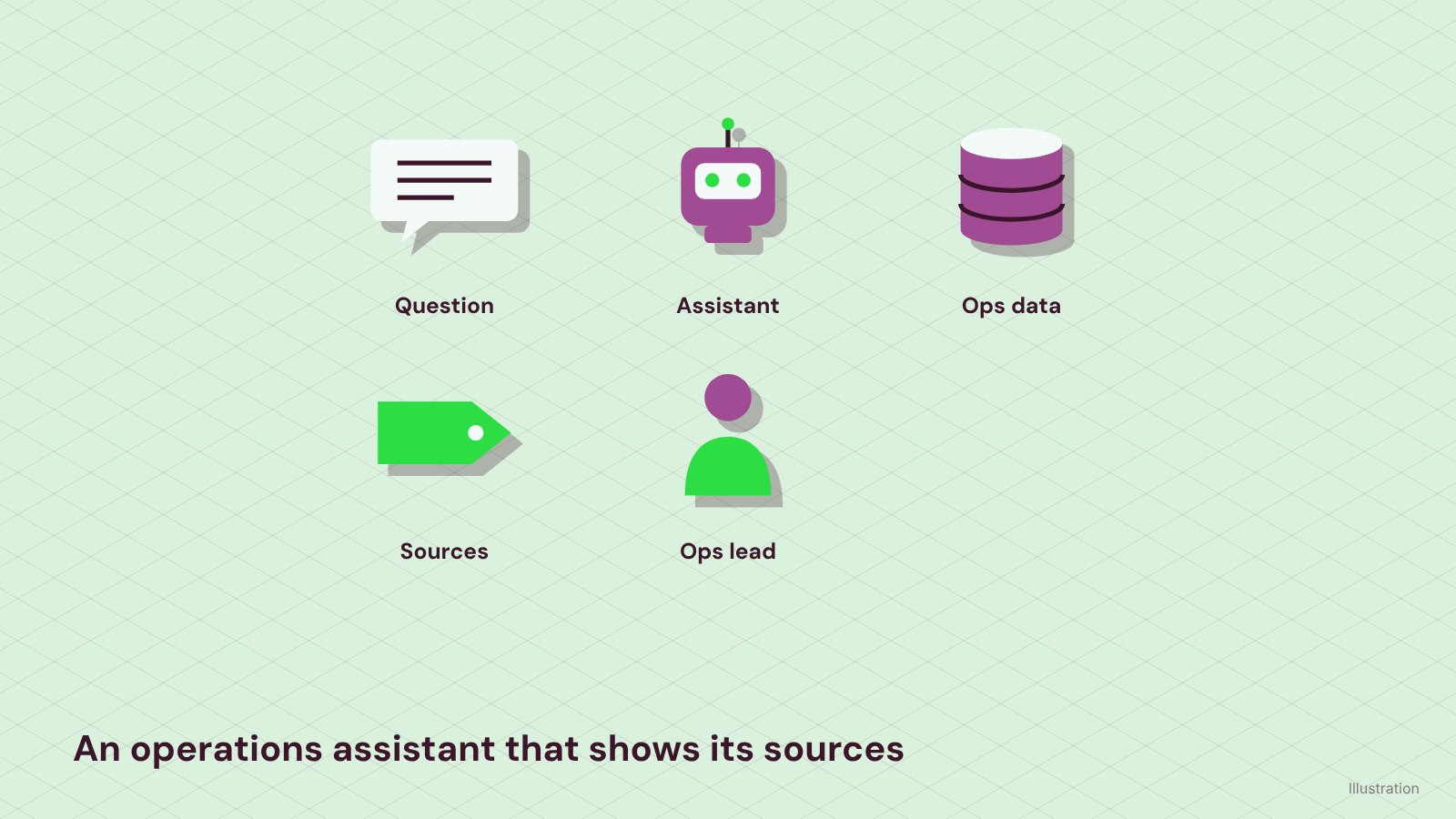
Ask "What is our runway?" or "How much is overdue?" and AI CFO answers from the calculation it already makes: no AI involved, nothing counted against your limit.
Ask "Why did operating expenses rise, and what should we look at?" and the question goes to the model, but the model sees only a numbered list of figures calculated from your books: the command center, the 12-month trend, expenses by category and the biggest movers, receivables and payables, budget variance, risk indicators and open anomalies.
- It must cite them.
- A point without a valid citation is dropped.
- A number in the answer that isn't in the figures is listed for you to check.
Payroll detail is never in the figures. The assistant doesn't give tax, legal or investment advice, and it says "may" when it suggests an explanation: the books show what changed, not why.
Written answers use the AI CFO's own daily limit (30 by default) and need a finance seat.
A monthly report someone else signs
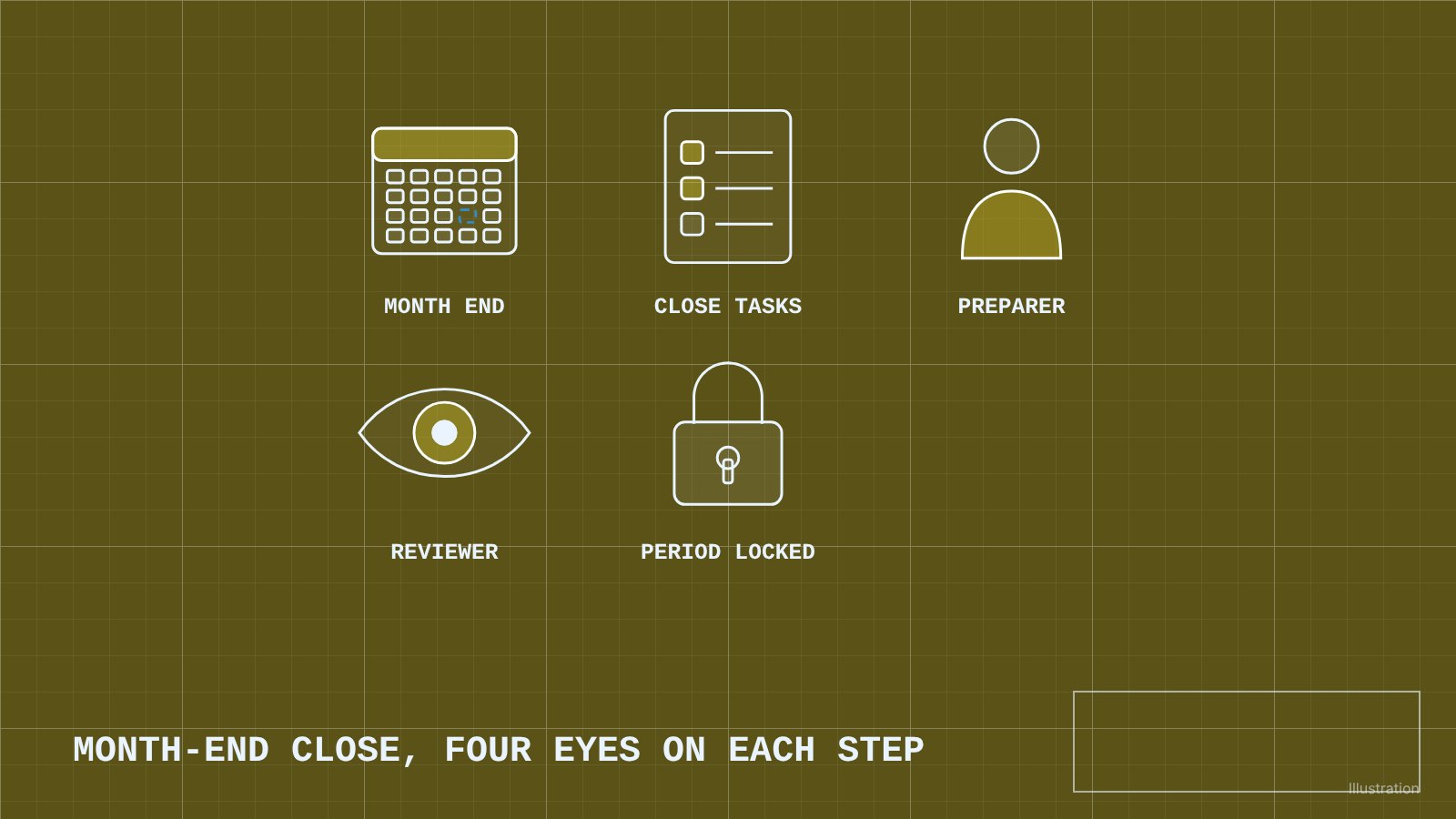
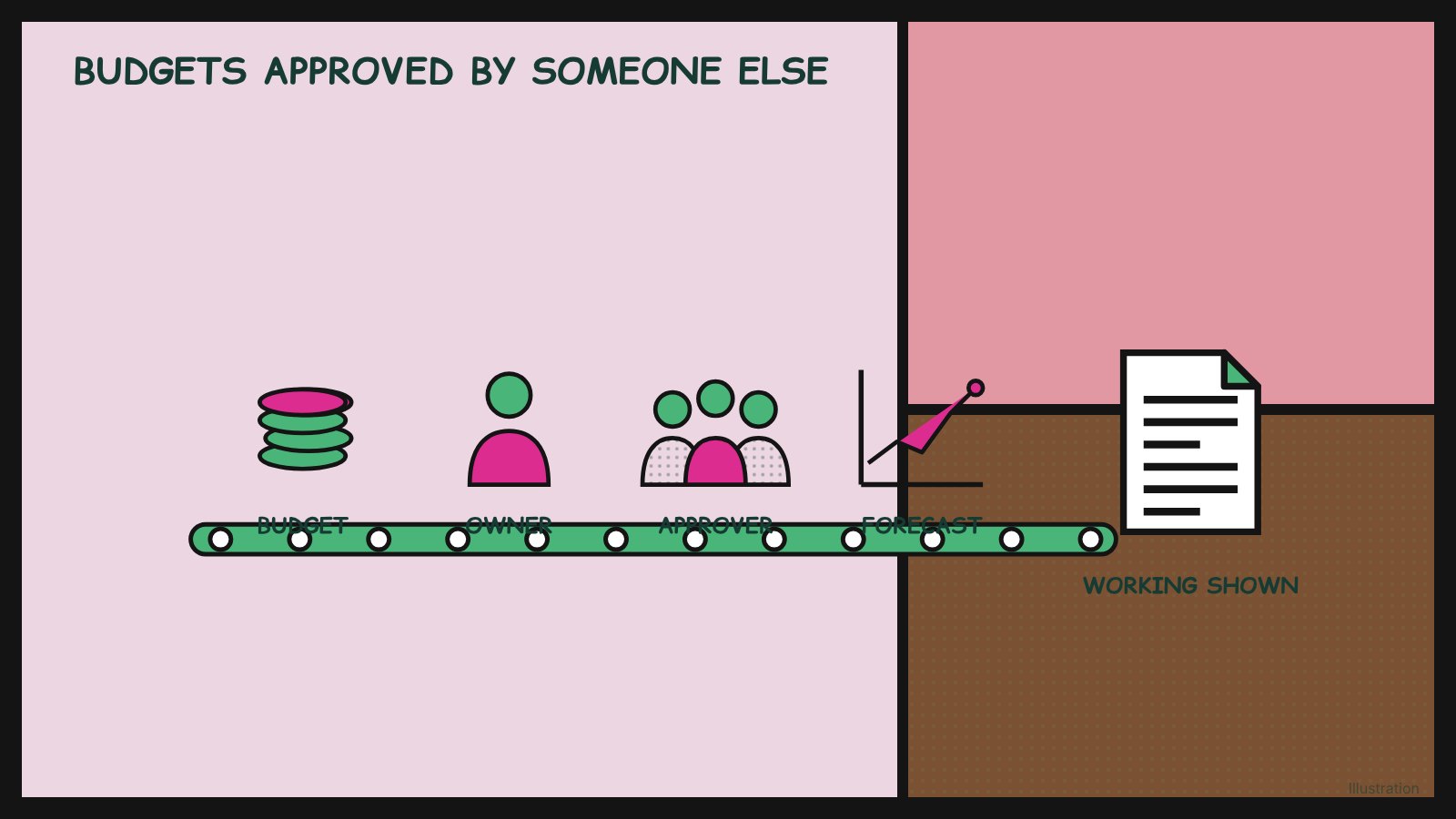
A report holds the month's calculated figures and statements, with an optional executive summary written from the same cited figures. The author can't approve it; someone with "Approve financial workflows" does. Download it as Markdown for the board pack. Drafts say they're drafts.
What if
Scenarios apply levers to the profit-and-loss forecast: faster or slower growth, a price change, hires with a start month and cost, a change in operating expenses. You see net income, revenue and the month cash would run out, against the base case, and the assumption that cash moves with net income is stated next to it.
Entities and treasury
With more than one legal entity, each one's statements sit side by side with the consolidated total. Intercompany balances are eliminated; if they don't agree, the difference is shown. Each line is translated at its own date's rate, and the translation difference that leaves is on its own line.
An investment register keeps deposits, bonds and funds with cost, value, rate and maturity: totals per currency, unrealised gains, and what matures in the next 90 days.
A worked example, start to finish
Here's the founder's board week, with AI CFO.
Tuesday, 21:00. She opens Ask the AI CFO and types "What is our runway?". It's calculated: 14 months, with its definition shown and the figures behind it one click away. No AI is used.
21:05. "How much is overdue?" Calculated: £84,000 in receivables over 30 days, from 7 customers, linked to the list.
21:10. "Why did operating expenses rise, and what should we look at?" The written answer:
- Operating expenses rose £31,000 month on month [figure 12].
- The biggest movers were legal fees +£18,000 [figure 15] and rent +£9,500 [figure 16]. Marketing fell £4,000 [figure 17].
- The legal increase may reflect a one-off matter; the books show the change, not the reason [figure 15].
- Look at whether the new rent is in the budget: rent is £9,500 over budget this month [figure 22].
A sentence about "engineering hires" was dropped: payroll detail isn't in the figures. A claim that "SaaS costs grew 40%" was listed for her to check, because 40% isn't in the figures.
21:20. She opens Figures cited, clicks figure 15, and sees the ledger lines: one £18,000 invoice from the company's law firm for a contract dispute. One-off, as suspected.
Wednesday, 10:00. Her finance lead prepares the monthly report: statements, the command center figures, and an executive summary written from the same cited figures. He can't approve it himself; the founder, who has Approve financial workflows, approves it. They download it as Markdown for the board pack.
Wednesday, 14:00. The board will ask about hiring. She runs a scenario: 6 hires starting in month 3 at £6,500 a month each, revenue growth 4% a month instead of 3%. The result: net income and revenue against the base case, and cash runs out in month 12 instead of 14. Next to it: "assumes cash moves with net income".
Wednesday, 15:00. The group has a small subsidiary in Ireland. On Entities, the UK and Irish statements sit side by side with the consolidated total. Intercompany balances don't agree by €2,100, and the difference is shown. The finance lead traces it to an invoice booked in one entity but not the other.
Thursday. The board pack has every figure from the books, the report approved by someone other than its author, a scenario with its assumption stated, and the consolidation's one discrepancy explained.
Five more real-world scenarios
1. A tax question
Situation. The founder asks whether she should claim R&D tax credits.
How TR handles it. The assistant doesn't give tax, legal or investment advice, and says so.
2. An explanation the books can't support
Situation. Someone asks why a customer stopped paying.
How TR handles it. The books show the receivable is overdue, not why. Any suggestion is phrased with "may".
3. An author approving their own report
Situation. The finance lead tries to approve the report he wrote.
How TR handles it. It's refused. Someone else with Approve financial workflows approves it.
4. Deposits maturing soon
Situation. A fixed deposit matures in 45 days.
How TR handles it. The investment register lists what matures in the next 90 days, per currency.
5. A translation difference
Situation. Euro rates moved during the month.
How TR handles it. Each line is translated at its own date's rate, and the translation difference is on its own line.
Before and after
Before. A confident 19-month runway that was really 14, an invented explanation, and no way to tell which.
After. Simple figures calculated, explanations written only from cited figures, invented numbers listed for checking, reports approved by someone else, scenarios with their assumptions stated, and consolidation that shows its differences.
How to tell it's working
- Runway and overdue questions show no AI used.
- Every written answer has figures you can open, and listed numbers are checked.
- Board reports are approved by someone other than the author.
- Intercompany differences are explained, not hidden.
Who it's for
- CFOs and finance leads at growing companies.
- Founders and CEOs who prepare board packs.
- Group finance teams with more than one entity.
How it fits with the rest of TicketResolve
That completes AI CFO: from imported books to statements, budgets, forecasts, controls and an assistant, reading and recommending, never posting or paying. Its figures feed the AI General Manager, the AI VP of Operations and the AI Director of Cost Optimization.
Mistakes to avoid
- Asking "why" and taking the answer as fact. The books show what changed; the assistant says "may".
- Skipping Figures cited on important answers.
- Forgetting the cash assumption in scenarios.
Do it in TicketResolve, step by step
Where: AI CFO → Ask the AI CFO, Reports, Scenarios and Entities (/dashboard/cfo/assistant). You'll need: a finance seat, your books imported, and someone with Approve financial workflows to approve reports. Full guides: Asking the AI CFO, reports and scenarios and Reading the command center and statements.
- Ask. Ask the AI CFO: simple figure questions are calculated; "why" and "what should we" questions get a written answer citing the figures.
- Check what it cites. Open Figures cited. Numbers the answer used that aren't in the figures are listed for you to check.
- Prepare the monthly report. Reports → New report, with or without a written summary. Someone else approves it; download it as Markdown.
- Try a scenario. Scenarios: change growth, prices, hires or costs and compare profit, cash and runway with the base case.
- Look across entities. Entities: each entity side by side and consolidated, with intercompany eliminations.
- Keep the investment register. Record deposits, bonds and funds with cost, value, rate and maturity.
How to check it worked: a written answer shows its cited figures, a status question shows no AI used, and the monthly report shows an approver who isn't its author.
Read how it works.
Frequently asked questions
Does the AI calculate runway? No. Runway is calculated directly from your books, with no AI.
What does the model see? A numbered list of figures calculated from your books. Never payroll detail.
What happens to points without a citation? They're dropped. Numbers not in the figures are listed for you to check.
Does it give tax or investment advice? No.
Who approves the monthly report? Someone with Approve financial workflows who isn't the author.
What does a scenario assume about cash? That cash moves with net income, stated next to the result.
How are intercompany balances handled? They're eliminated; if they don't agree, the difference is shown.
Does AI CFO post journals or pay bills? No. It reads and recommends, never posts or pays.
Explore Topics
Written by
Ghulam Shabbir
Content creator and writer sharing insights and stories.