
A Saving Is Not Real Until Someone Checks It
Every cost programme has a slide with a big number on it. Six months later, nobody can say how much was actually saved, and somebody in support is quietly doing the work of a tool that was “consolidated”. The AI Director of Cost Optimization finds savings with evidence, scores them with the working shown, stops harmful cuts with efficiency guardrails, and counts savings only when someone has verified them.
In February, the operations director at a 400-person insurance broker launches a cost programme. A consultant's spreadsheet promises $620,000 a year from eight changes. The biggest is consolidating two customer-messaging tools into one: $140,000 a year.
The consolidation goes through in April. The cheaper tool doesn't support the SMS reminders the claims team relied on. So two people in claims now phone customers about missing documents instead. Nobody adds their time to the savings spreadsheet. Customer satisfaction on claims drops five points by summer.
In October, the CFO asks how much the programme actually saved. The spreadsheet says $620,000. The accounts show licence costs down by about $260,000. Nobody can say where the rest went, or whether it ever existed. One "saving" assumed a contract would be cancelled that was actually renewed by another department. Another was counted twice.
Every cost programme has a slide with a big number on it. Six months later, nobody can say how much of it was actually saved.
First, the basics
- Cost optimization is reducing spending without damaging what the business needs to do well.
- An opportunity is a possible saving, such as unused software licences. Evidence is the record that shows it exists. Assumptions explain how the amount was worked out.
- Discovery is the automatic search for opportunities across your systems.
- A score ranks opportunities. Payback is how long it takes for the saving to cover the cost of making the change. Net benefit is savings minus costs.
- A quick win is simple, pays back fast and has decent evidence.
- A guardrail is something a saving must not damage, such as customer experience, security or compliance. Blocked means a guardrail says no.
- A business case sets out the saving, the cost, the payback and how the saving will be measured.
- Verified means someone other than the owner checked what was actually saved. Eroding means a verified saving is slipping back.
- Identified, approved, realised: found, agreed, and actually achieved.
Why does this matter? Cuts that look good on a slide can quietly move work onto people, hurt customers or never happen at all. Savings that are found with evidence, checked against guardrails and verified after the fact are the only ones a business can plan around.
The problem, in plain terms
- Savings are estimated without evidence, often by someone outside the business.
- Amounts are invented when the data can't support one.
- Cuts hurt something else: customers, service quality, security, or another team's workload.
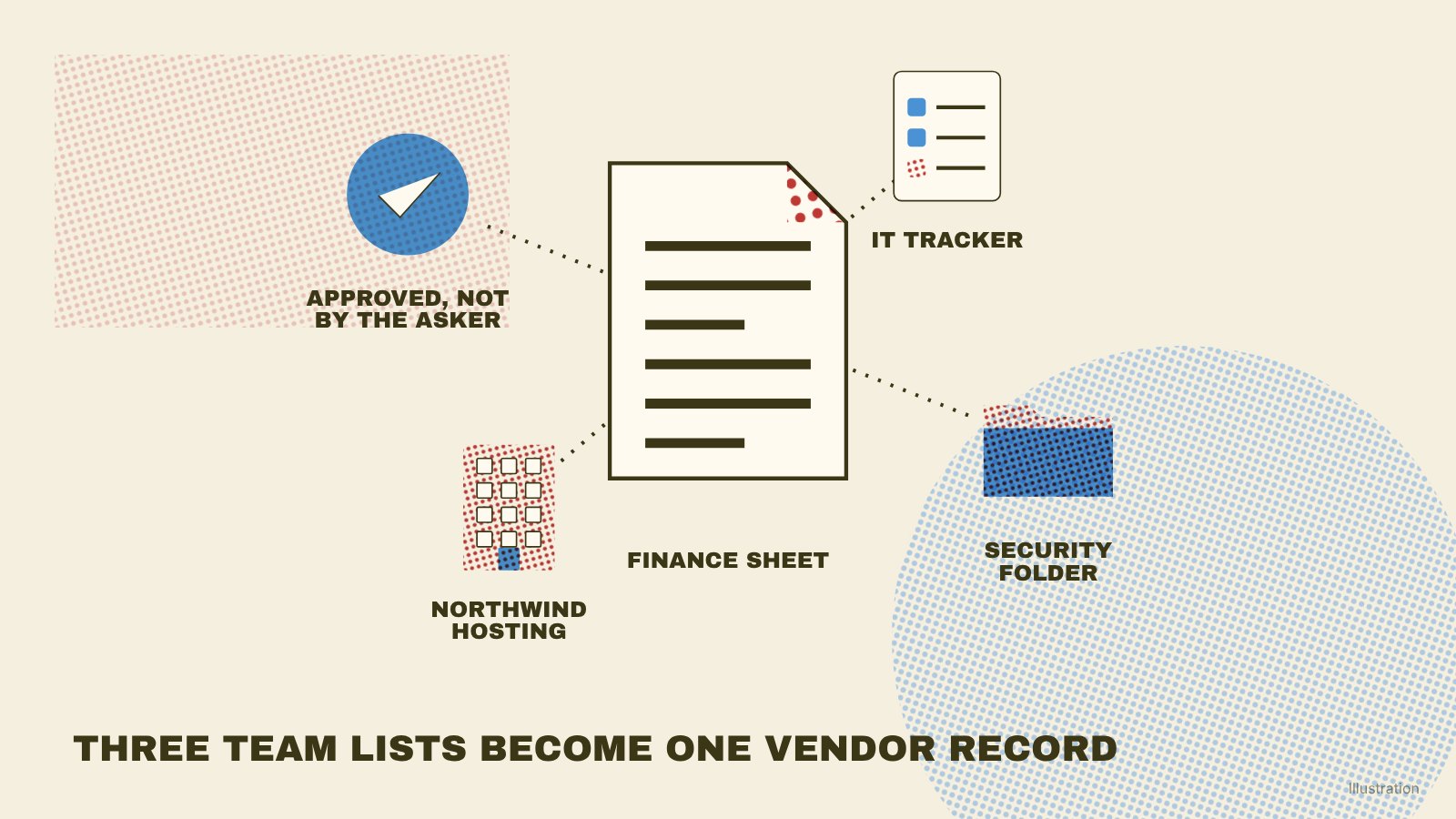
- Costs move instead of disappearing, from one department's budget to another's.
- Nobody checks what was actually saved.
- Identified, approved and realised savings are added together on the same slide.
Found with evidence
Discovery runs every day across the products you already use. It reads:
- contracts from the AI VP of Operations;
- expense categories from AI CFO;
- server utilisation from DevOps & SRE;
- process runs and project budgets;
- and never payroll detail.
It looks for unused licence seats, tools that overlap, price rises at renewal, renewals needing a decision, spend spikes, idle servers, process rework and project overruns. Each finding links to its evidence and states its assumptions.
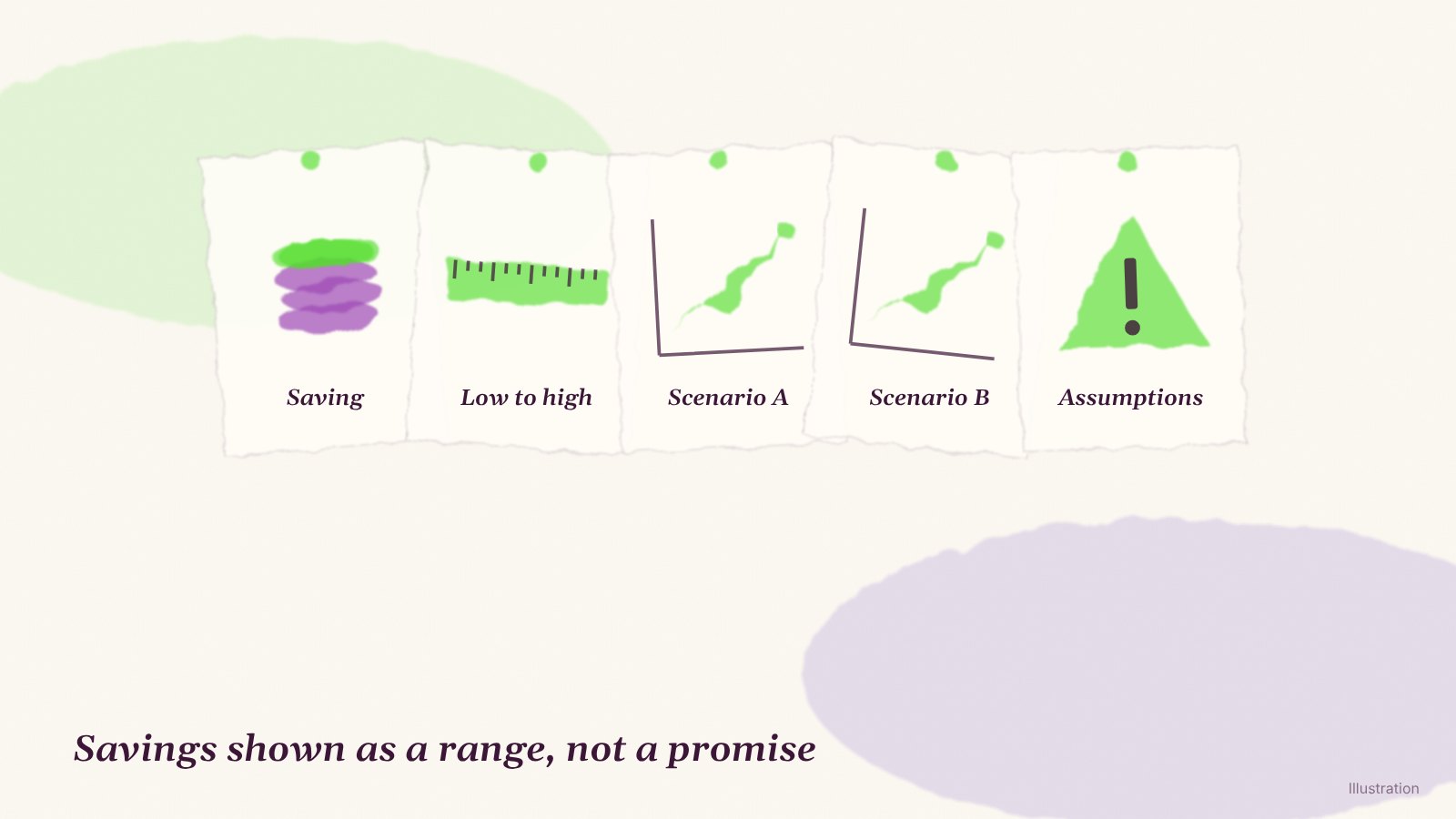
When the evidence can't support an amount (an idle server whose cost isn't recorded, a spend spike that hasn't been explained), the amount is left empty and the opportunity says it needs an estimate.
A score you can argue with
Opportunities are ranked by a score from 0 to 100: a weighted average of five inputs, all shown: net benefit over three years, payback, complexity, confidence and risk. Change the weights and the ranking changes with them. Quick wins (simple, fast payback, decent evidence) are found automatically.
Guardrails before savings
A saving that hurts customers isn't a saving. Every opportunity is assessed on ten dimensions: customer experience, service quality, efficiency, productivity, delivery, reliability, security, compliance, workforce and revenue. Each department has critical dimensions; a severe impact on one blocks the opportunity.
Safeguards are checked automatically too: no supported amount, no implementation cost, low confidence, or a cost that simply moves to another department.
A blocked opportunity can go ahead only if someone with approval rights, who didn't raise it, records an override with a reason.
Counted when verified
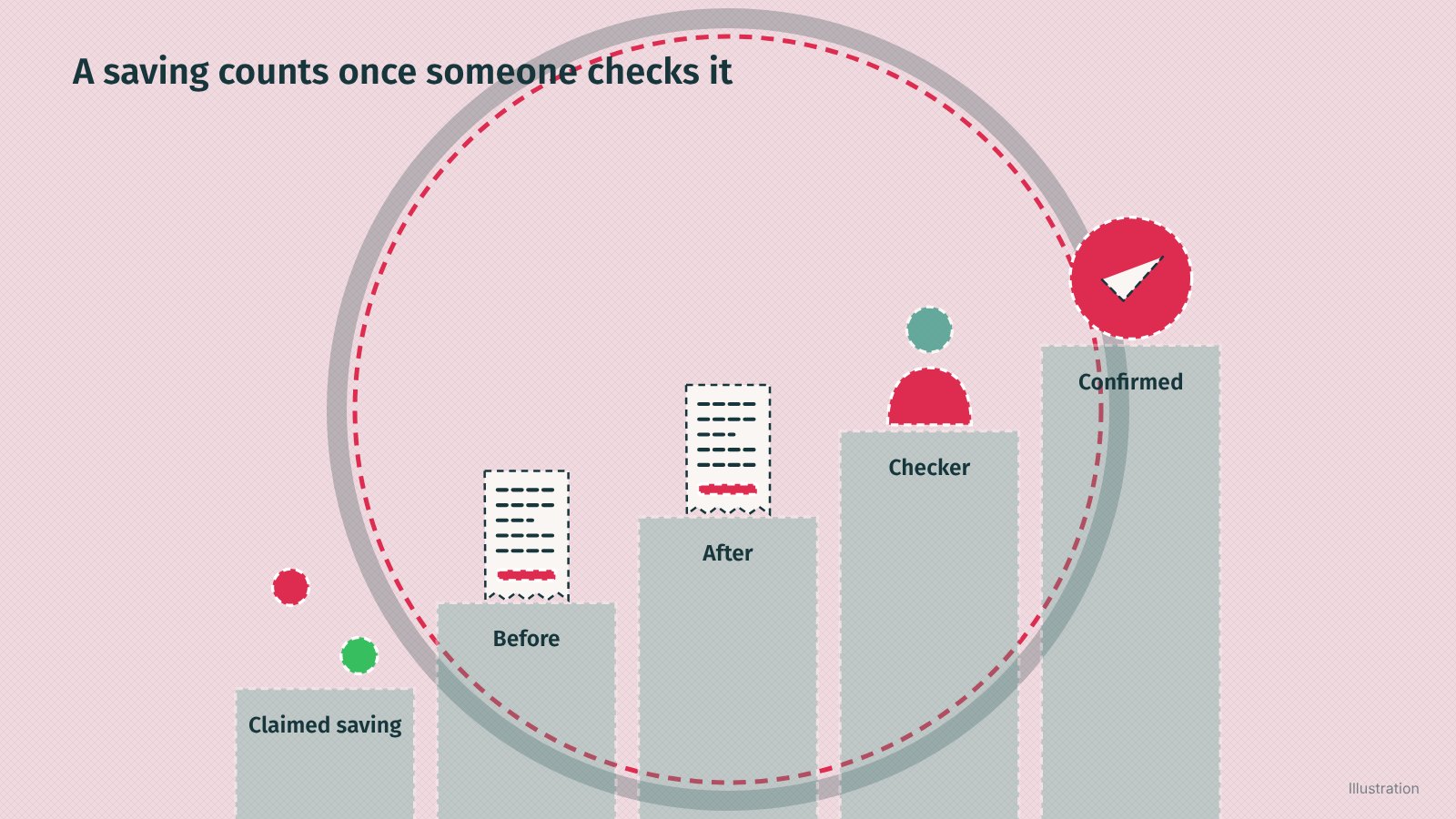
A cleared opportunity becomes a business case: savings, implementation cost, payback, the three-year net, and the measure that will prove it. Someone other than the author approves it, within their limit. When it's done, someone other than the owner records what was actually saved and how they checked.
Then it keeps being checked. Each month the owner records whether the saving is still in place. If it falls below 80% of the verified amount, it's flagged as eroding.
Identified, approved and realised savings are always totalled separately. Only the last one is real.
A worked example, start to finish
Here's how the same broker runs its next cost programme.
Week 1, Monday. The operations director, Olu, opens the command center and clicks Run discovery now. 18 opportunities appear. The top three by score:
- Unused licence seats in the CRM: 64 seats unused for 90 days, $46,000 a year, evidence linked to the licence report. Quick win.
- Overlapping tools: two customer-messaging platforms with similar features, estimated $140,000 a year.
- Idle servers: four staging servers under 3% CPU for 60 days. Amount empty: their cost isn't recorded, so it needs an estimate.
Monday, 11:00. Olu opens the messaging consolidation and clicks Guardrails. He rates each of the ten dimensions with the claims and customer service leads. For the claims department, customer experience is a critical dimension, and losing SMS reminders would be a severe impact. The opportunity is blocked. A safeguard also fires: the cost of manual phone calls would move to another department.
Monday, 14:00. The licence clean-up passes its guardrails. Olu builds the business case: $46,000 a year saved, $3,000 implementation cost (an admin's time), payback under a month, and the measure: licence invoice at next renewal. He creates the initiative and submits it. The CFO, within her limit and not the author, approves it.
Week 2. The infrastructure lead estimates the idle servers' cost from the cloud bill: $18,000 a year. The opportunity gets an amount and its score updates.
Month 3. The CRM renewal arrives with 64 fewer seats. The procurement manager, who didn't own the initiative, records the verified saving: $45,200 (a small price rise reduced it), checked against the new invoice.
Months 4–9. Each month the owner records whether the saving is still in place. In month 7, teams have added 22 seats back, and the saving falls to $29,600, below 80% of the verified amount. It's flagged as eroding. Olu sets up a quarterly seat review with team leads.
Month 9, CFO review. The command center shows identified $410,000, approved $162,000, realised and verified $118,000, each totalled separately. The CFO knows exactly which number is real, and the claims team still has its SMS reminders.
Five more real-world scenarios
1. A price rise at renewal
Situation. A vendor's renewal notice includes a 14% increase.
How TR handles it. Discovery flags the price rise at renewal, with the contract as evidence, while there's still time to negotiate.
2. A saving with no supported amount
Situation. A spend spike in travel hasn't been explained.
How TR handles it. The amount is left empty and the opportunity says it needs an estimate. Nobody invents a number.
3. An override for a blocked opportunity
Situation. A blocked opportunity has a workable mitigation the guardrail didn't account for.
How TR handles it. Someone with approval rights, who didn't raise it, records an override with a reason. The author can't override their own.
4. Changing what matters most
Situation. The CFO cares more about payback than three-year benefit this year.
How TR handles it. She changes the weights, and the ranking changes with them. The inputs stay visible.
5. The owner verifying their own saving
Situation. An initiative owner tries to record the realised amount.
How TR handles it. Someone other than the owner records what was actually saved and how they checked.
Before and after
Before. $620,000 on a slide, a consolidation that moved work onto the claims team, and $260,000 traceable months later.
After. Opportunities with evidence, amounts left empty when unsupported, guardrails that block harmful cuts, business cases approved by someone else, savings verified by someone other than the owner, and erosion caught month by month.
How to tell it's working
- Every opportunity links to evidence, and empty amounts get estimated rather than guessed.
- No opportunity that hurts a critical dimension goes ahead without a recorded override.
- Realised savings are reported separately from identified and approved ones.
- Eroding savings are acted on, not discovered at year end.
Who it's for
- COOs and operations directors running cost programmes.
- CFOs who need savings they can put in a budget.
- Department heads who want cuts that don't damage their teams.
How it fits with the rest of TicketResolve
Discovery reads from the AI VP of Operations (contracts), AI CFO (expenses), DevOps & SRE (servers), processes and project budgets. Next came the AI Director assistant, savings scenarios with a confidence-weighted view, the executive report and alerts.
Mistakes to avoid
- Skipping guardrails for quick wins. Fast savings can still hurt.
- Measuring savings by the plan. Measure by what the invoice or ledger shows.
- Forgetting to record the monthly check. That's how erosion gets caught.
Do it in TicketResolve, step by step
Where: AI Director of Cost Optimization (/dashboard/cost). You'll need: a Cost Optimization seat, the connected products you want discovery to read, and approvers with limits. Full guide: From an opportunity to a verified saving.
- Run discovery. Command center → Run discovery now. It reads contracts, the ledger, servers, processes and project budgets, never payroll detail.
- Read the evidence. Open an opportunity: the evidence links to its source, the assumptions explain the amount, and the score shows every input.
- Assess the guardrails. Guardrails → rate the impact on each dimension. Critical dimensions must be assessed; a severe impact on one blocks it.
- Build the business case. Business case → savings, implementation cost and how the saving will be measured. Then create the initiative.
- Get it approved. Initiatives → submit it. Someone else approves it, within their limit.
- Verify and monitor. When implemented, someone other than the owner records the amount actually saved and how it was checked. Record a monthly check that it lasts.
How to check it worked: the command center shows identified, approved and realised savings as three separate totals, and every realised saving names who verified it and how.
The AI Director of Cost Optimization is $149 per Cost Optimization seat a month and in the 7-day free trial.
Frequently asked questions
Does discovery read payroll? No. Never payroll detail.
What if the evidence can't support an amount? The amount is left empty and the opportunity says it needs an estimate.
How is the score calculated? A weighted average of net benefit, payback, complexity, confidence and risk, all shown.
What blocks an opportunity? A severe impact on one of its department's critical dimensions.
Can a blocked opportunity go ahead? Only with an override, with a reason, from someone with approval rights who didn't raise it.
Who verifies a saving? Someone other than the owner, recording what was saved and how they checked.
When is a saving eroding? When it falls below 80% of the verified amount.
Are identified and realised savings added together? No. They're always totalled separately.
Explore Topics
Written by
Ghulam Shabbir
Content creator and writer sharing insights and stories.