
Savings Scenarios That Admit Uncertainty
“How much can we realistically save this quarter?” has an uncomfortable answer: it depends on which estimates you believe. The AI Director of Cost Optimization is complete: an assistant that answers from your opportunities and cites them, savings scenarios with a confidence-weighted view, an executive report and alerts for strong opportunities and eroding savings.
In January, the COO of a 600-person software company promises the board $1.2M in cost savings this year. The list behind it has nine items: consolidate two monitoring tools, renegotiate the cloud contract, cut unused SaaS licences, move a data warehouse to cheaper storage, reduce contractor spend, and four more.
By September, the realised savings are $410,000. The board wants to know what went wrong. The answer is that nothing went "wrong". The $1.2M was the sum of nine estimates, and they were never equally likely:
- The cloud renegotiation ($380,000) depended on a commitment the finance team wasn't ready to make.
- The monitoring consolidation ($210,000) was blocked by the security team, because one tool held audit logs they were required to keep.
- The SaaS licences ($95,000) were realised in full, early.
- The contractor reduction ($160,000) happened, then quietly reversed when two projects slipped and contractors were brought back.
Every estimate was reasonable on its own. Adding them up as if they were all certain wasn't.
First, the basics
- A cost optimization opportunity is a possible saving, found from contracts, spending, servers, processes or project budgets.
- An estimate is how much the opportunity might save. Confidence is how sure that estimate is: high, medium or low.
- A confidence-weighted total counts each estimate in proportion to how sure it is. A $100,000 saving at low confidence counts for less than one at high confidence.
- A guardrail is something a saving must not damage, such as security, compliance or customer experience. Blocked means a guardrail says no.
- An initiative is an approved plan to capture a saving.
- Identified, approved, realised: identified savings were found; approved ones were agreed; realised ones actually happened and were checked.
- Eroding savings are ones that were realised but are slipping back.
- Implementation cost is what it costs to make the change. One-time savings happen once, not every year.
Why does this matter? Cost-cutting promises are easy to make and hard to keep. When estimates are added up as if they're certain, leaders promise more than the plan can deliver, and trust suffers when the results come in. Showing uncertainty honestly leads to better promises and better choices about which savings to pursue.
The problem, in plain terms
- Estimates are added up as if they were certain.
- Blocked opportunities stay in the total, because nobody took them out.
- Implementation costs are left out, so net savings look bigger.
- Currencies are mixed.
- Realised savings erode and nobody notices.
- AI summaries turn estimates into facts, or recommend savings that a guardrail has ruled out.
Two numbers, not one
Pick the opportunities you're considering and the scenario shows two totals:
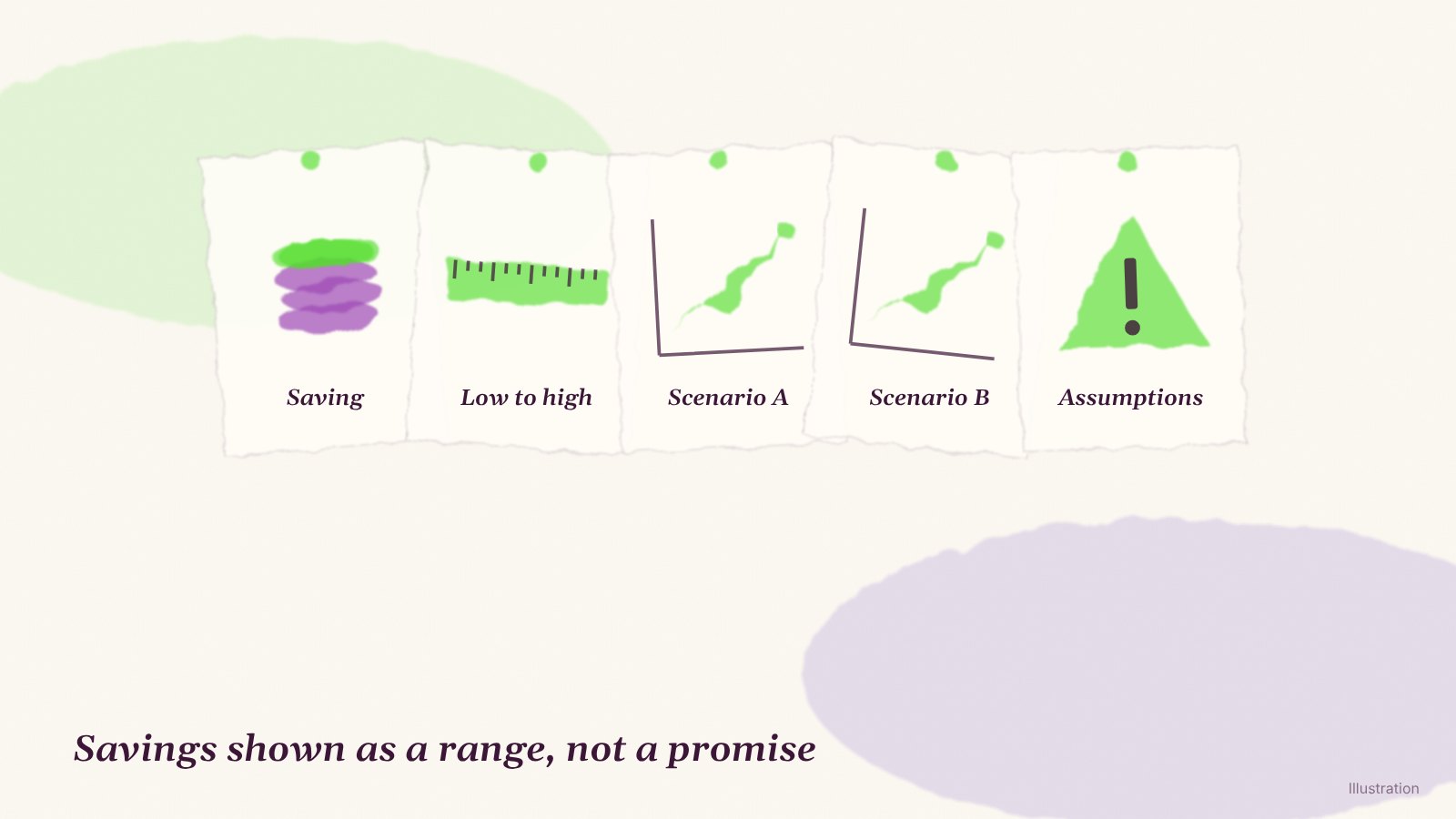
- The full estimate: their estimates added up.
- The confidence-weighted total: each estimate weighted by its confidence, 90% of the high-confidence ones, 60% of the medium and 30% of the low.
The gap between them is the uncertainty in your plan.
Opportunities blocked by a guardrail are left out and listed. So are the ones that still need an estimate. Implementation cost and one-time savings sit alongside, and everything stays in its own currency. Nothing changes when you run one.
An assistant that knows estimates from results
Ask for the quick wins, the realised savings or what's eroding, and the answer is calculated straight from the opportunities and initiatives, with no AI involved.
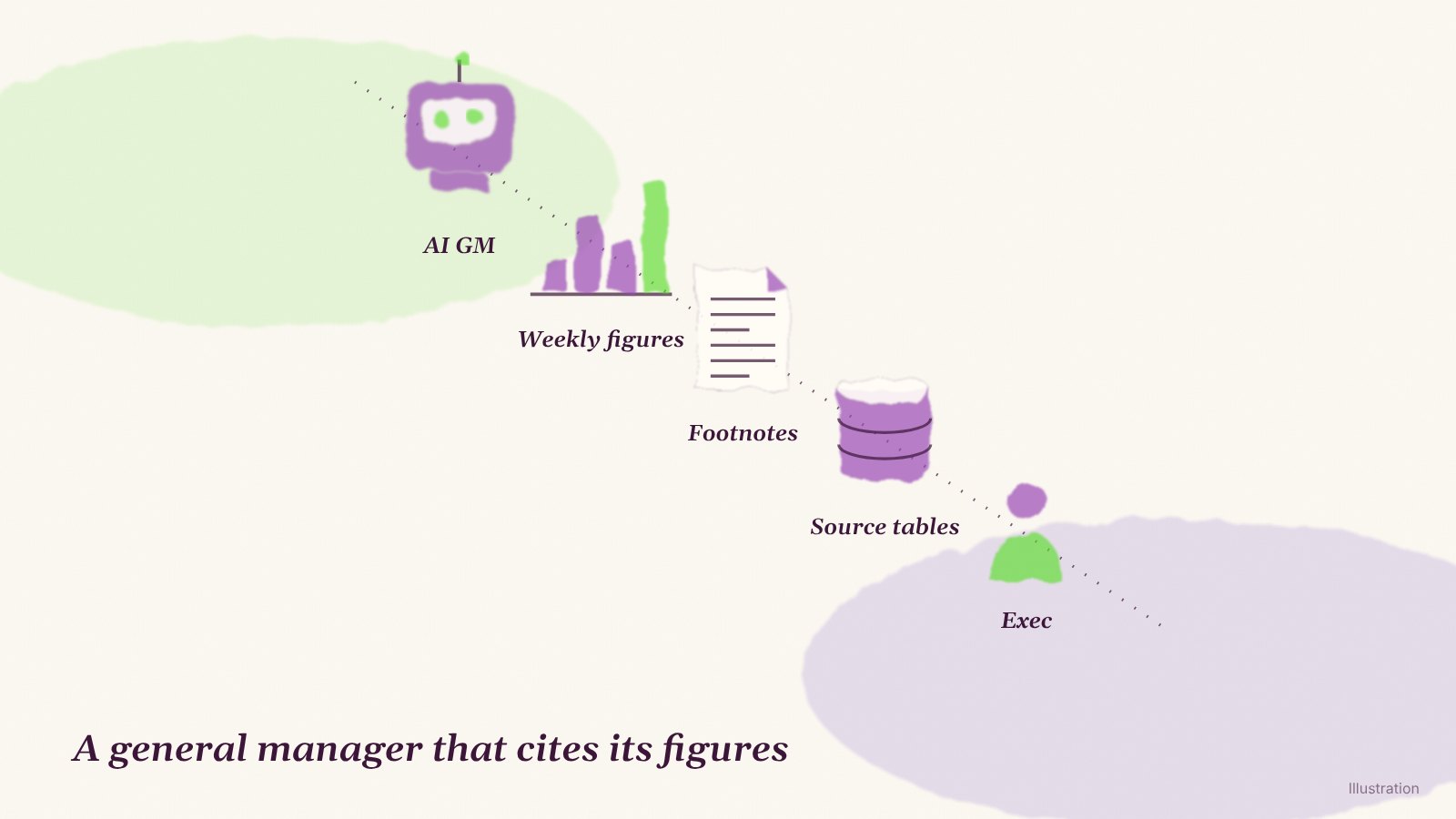
Ask what to focus on this month, and the assistant writes an answer from numbered figures: each opportunity's score, evidence and guardrail state, each initiative's stage, and what has actually been verified.
- Every point cites them.
- It keeps calling estimates estimates.
- It won't recommend a saving that a guardrail has blocked.
A report and a nudge
The executive report puts identified, approved and realised savings side by side, then the top opportunities, the blocked ones, the eroding ones and every initiative's stage. It's calculated and downloads as Markdown.
After the daily discovery, approvers hear about new opportunities scoring 70 or more and about savings that are slipping, once each, not every day.
A worked example, start to finish
Here's how the same COO, Grace, builds next year's savings commitment.
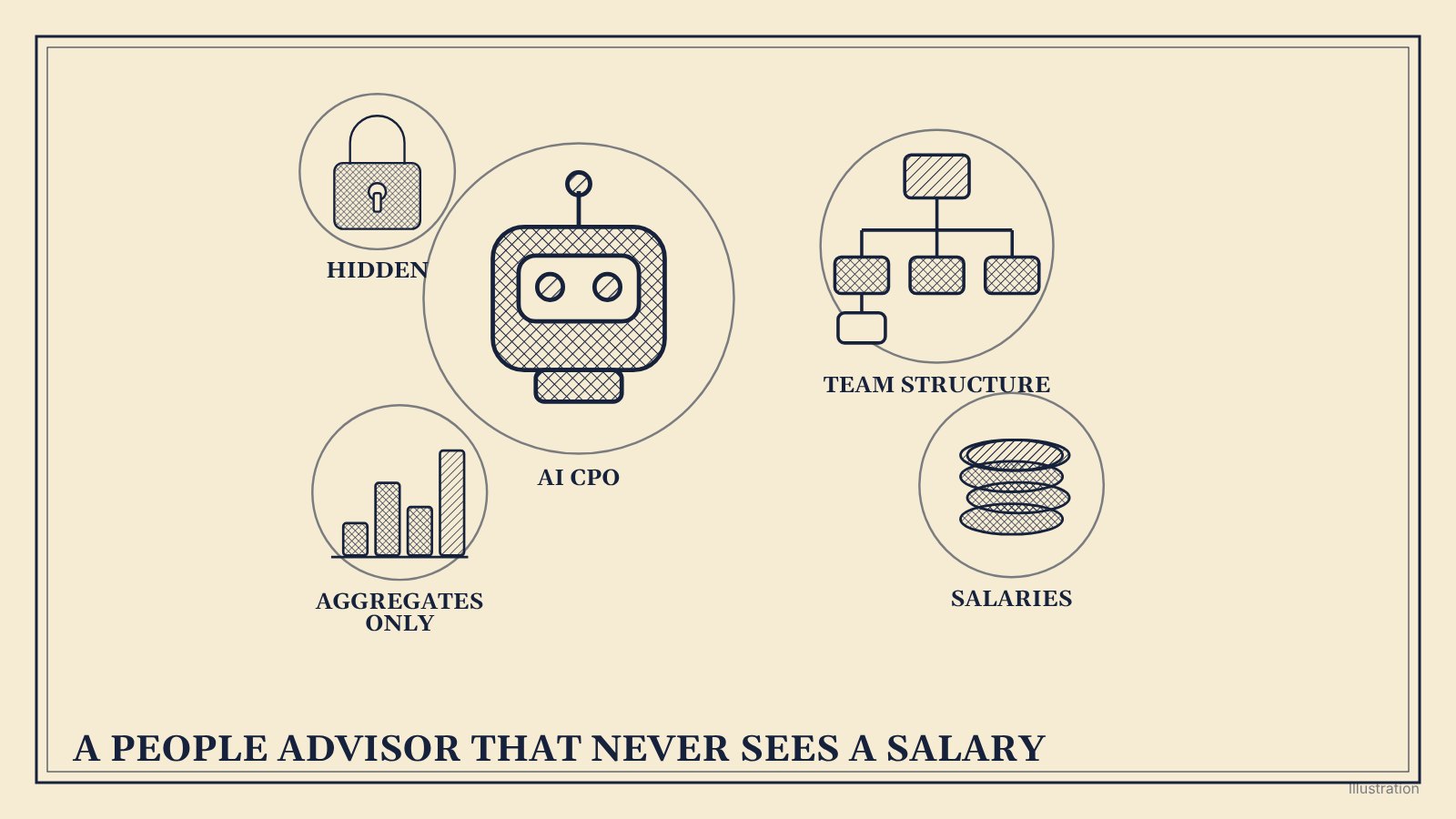
December, week 1. Daily discovery has been running for months, reading contracts, the ledger, servers, processes and project budgets (never payroll detail). There are 23 open opportunities, each with evidence, assumptions and a score.
Monday, 10:00. Grace opens Scenarios and ticks the 11 she's considering. The result:
- Full estimate: $1.31M a year (USD), plus €140,000 (EUR) for the European office lease, shown separately.
- Confidence-weighted: $780,000 a year (USD), €84,000 (EUR).
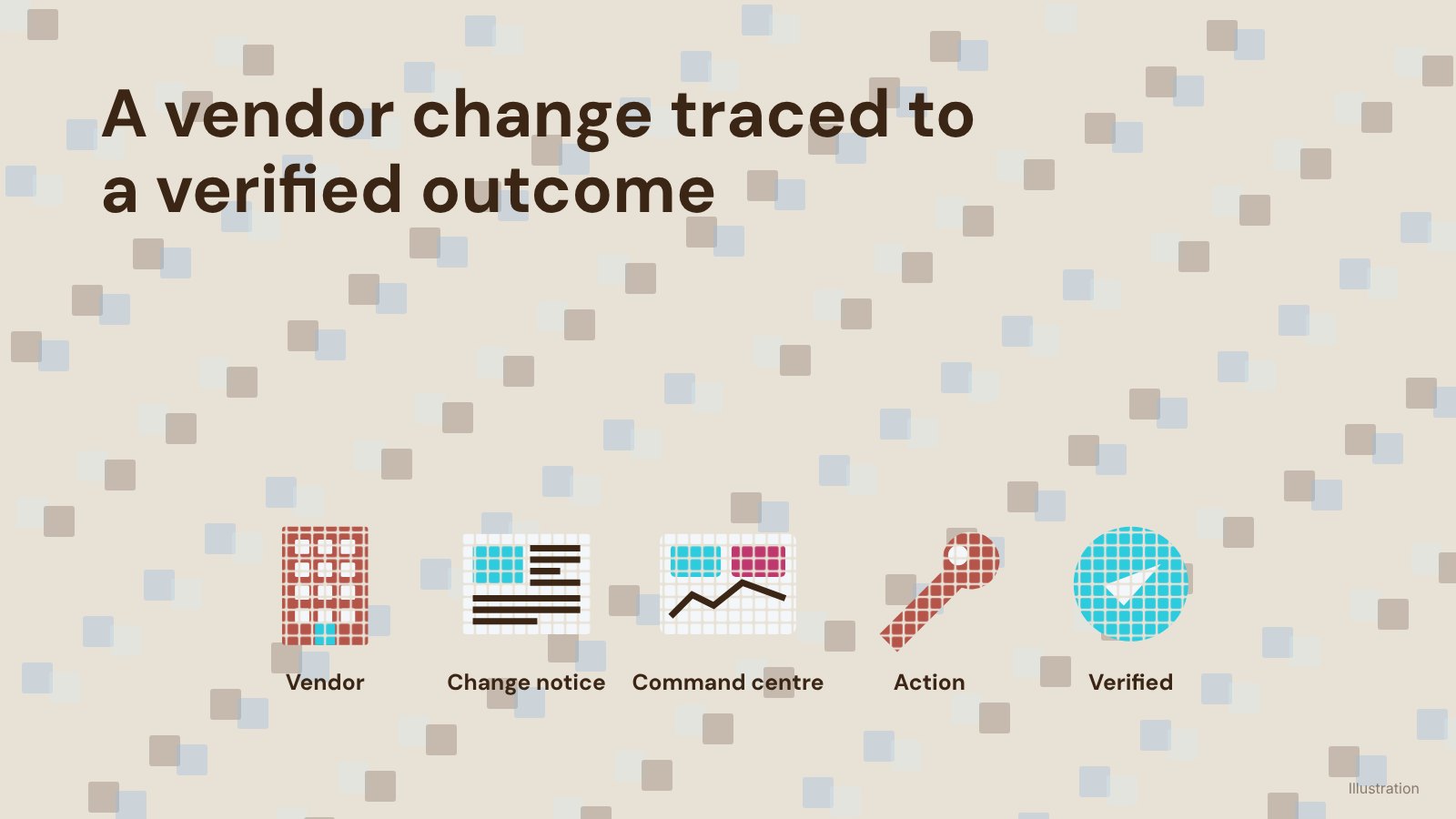
- Left out and listed: the monitoring consolidation (blocked by the security guardrail: audit logs) and a vendor change that still needs an estimate.
- Implementation cost: $140,000; one-time savings: $60,000 from cancelling a prepaid service.
The gap between $1.31M and $780,000 is the uncertainty.
10:20. She asks the AI Director: "What should we focus on in Q1?" The written answer cites its figures:
- SaaS licence clean-up: score 88, high confidence, evidence of 340 unused seats [figure 3];
- cloud reserved capacity: score 76, medium confidence, depends on a one-year commitment [figure 7];
- data warehouse storage tiering: score 71, medium confidence [figure 9].
It calls every number an estimate and doesn't mention the monitoring consolidation, because a guardrail blocked it.
10:40. She asks: "What's eroding?" That's calculated with no AI: last year's contractor reduction shows realised savings slipping, as two contractors were rehired.
Tuesday. Grace takes $800,000 to the board as the commitment, close to the confidence-weighted figure, and shows the full $1.31M as upside, with the confidence levels explained. She downloads the executive report for the board pack: identified, approved and realised side by side, the top opportunities, the blocked one, the eroding one and every initiative's stage.
Through the year. Each opportunity becomes an initiative with a business case, approved by someone else within their limit. When implemented, someone other than the owner records the amount actually saved and how it was checked, and records a monthly check that it lasts.
March. After the daily discovery, Grace's approvers are told about a new opportunity scoring 74: an over-provisioned database cluster. They hear about it once.
Year end. Realised and verified savings: $840,000. The board's question is different this time: how did they beat the commitment?
Five more real-world scenarios
1. A scenario with a blocked opportunity
Situation. A finance analyst ticks an opportunity that the security guardrail blocked.
How TR handles it. It's left out of both totals and listed as blocked.
2. Savings in two currencies
Situation. Some savings are in pounds, some in dollars.
How TR handles it. Everything stays in its own currency.
3. An opportunity without an estimate
Situation. A promising contract consolidation hasn't been sized yet.
How TR handles it. It's listed as still needing an estimate, not counted as zero or guessed.
4. Asking the AI to include a blocked saving
Situation. A manager asks the AI Director to "include the monitoring consolidation anyway".
How TR handles it. It won't recommend a saving that a guardrail has blocked.
5. Daily alert fatigue
Situation. Approvers worry about being notified every day about the same opportunities.
How TR handles it. They hear about each new high-scoring opportunity and each slipping saving once.
Before and after
Before. $1.2M promised as the sum of nine estimates, including a blocked one, and $410,000 realised.
After. Two totals, full and confidence-weighted, blocked and unsized opportunities listed separately, implementation costs alongside, currencies kept apart, and a commitment the evidence supports.
How to tell it's working
- Commitments sit near the confidence-weighted figure, with the full estimate shown as upside.
- Blocked opportunities are never in the totals.
- Realised savings are verified by someone other than the owner, and eroding ones are caught.
- The executive report replaces the savings slide.
Who it's for
- COOs, CFOs and finance leaders who commit to cost savings.
- Procurement and IT leaders who find and capture savings.
- Boards who want promises the evidence supports.
How it fits with the rest of TicketResolve
This completes the AI Director of Cost Optimization, which finds opportunities from contracts, the ledger, servers, processes and project budgets, checks them against guardrails, and tracks initiatives to verified savings.
Mistakes to avoid
- Promising the full estimate. It assumes every estimate is right.
- Leaving out implementation costs. Net savings are what the business keeps.
- Ignoring eroding savings. A saving that slips back was never really kept.
Do it in TicketResolve, step by step
Where: AI Director of Cost Optimization → Scenarios and AI Director (/dashboard/cost/assistant). You'll need: a Cost Optimization seat, opportunities from discovery, and approvers for initiatives. Full guides: Asking the AI Director and modelling savings and From an opportunity to a verified saving.
- Run discovery. Command center → Run discovery now. It reads contracts, the ledger, servers, processes and project budgets, never payroll detail.
- Assess guardrails. On each opportunity, Guardrails → rate the impact on each dimension. Critical dimensions must be assessed; a severe impact on one blocks it.
- Model a scenario. Scenarios → tick the opportunities and calculate. Compare the full estimate with the confidence-weighted one.
- Ask. AI Director → type a question or pick a suggestion. Status questions are calculated with no AI; others use one written answer from today's limit.
- Check the figures. Open Figures used to see what each point cites, and go to the opportunity or initiative.
- Build the business case and get approval. Savings, implementation cost and how the saving will be measured; someone else approves the initiative, within their limit.
- Verify and monitor. When implemented, someone other than the owner records the amount actually saved and how it was checked. Record a monthly check that it lasts.
- Share the report. Download the executive report from the AI Director page.
How to check it worked: your board commitment matches a scenario you can open, with blocked opportunities listed separately and both totals shown.
With this release, the AI Director of Cost Optimization is complete. It's $149 per Cost Optimization seat a month and in the 7-day free trial.
Frequently asked questions
What's the confidence-weighted total? Each estimate weighted by confidence: 90% for high, 60% for medium, 30% for low.
Are blocked opportunities included? No. They're left out and listed.
Are currencies combined? No. Everything stays in its own currency.
Does running a scenario change anything? No.
Does the AI call estimates results? No. It keeps calling estimates estimates, and cites every figure.
Which questions are answered without AI? Quick wins, realised savings and what's eroding.
How often are approvers alerted? After the daily discovery, once each, about opportunities scoring 70 or more and savings that are slipping.
What's in the executive report? Identified, approved and realised savings side by side, the top, blocked and eroding opportunities, and every initiative's stage.
Explore Topics
Written by
Ghulam Shabbir
Content creator and writer sharing insights and stories.