
Three Fixes, One AI Call: Comparing Fix Candidates Before Review
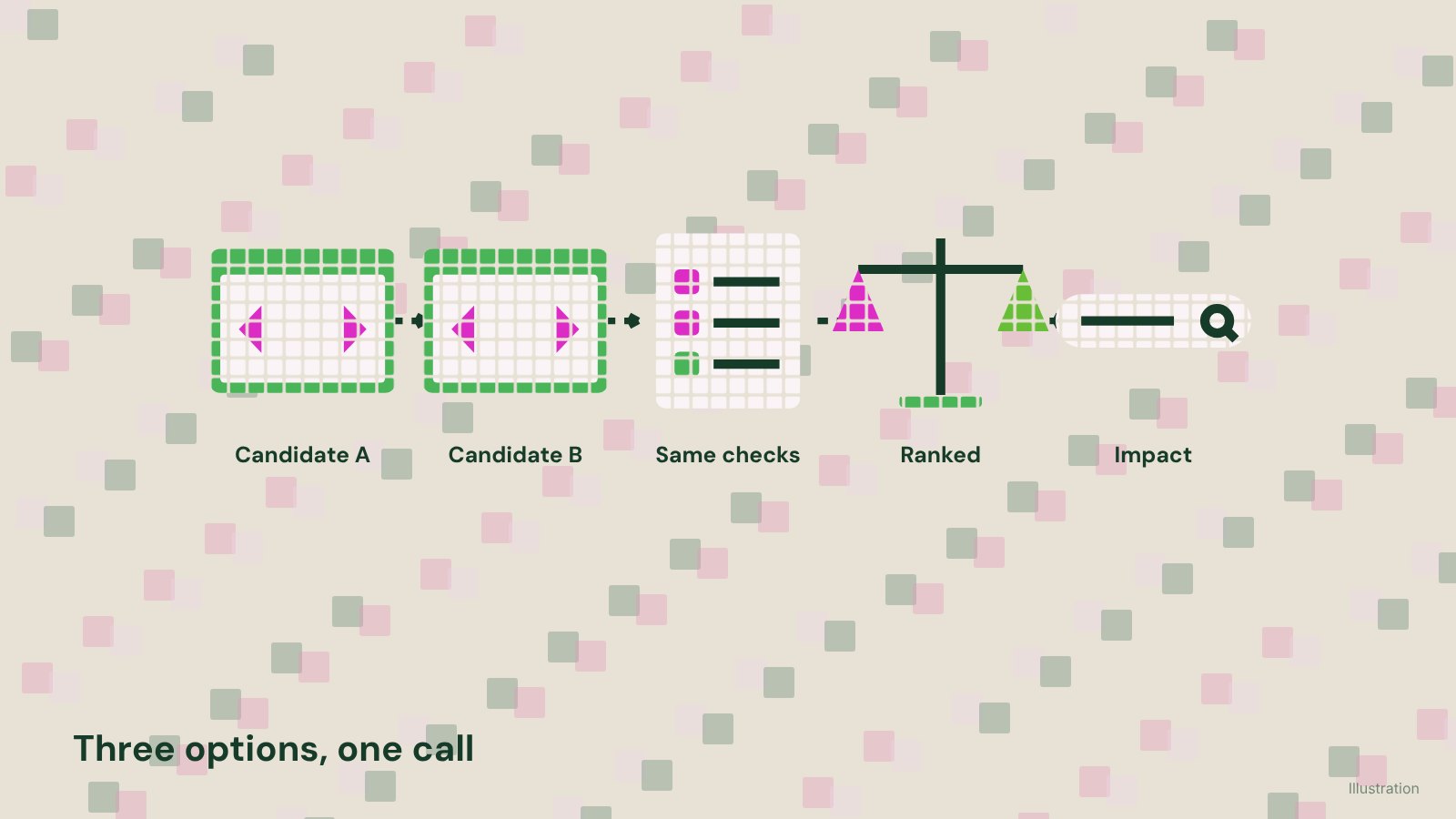
The first fix an AI suggests is not always the best one. TicketResolve now asks for up to three alternatives in the same call, puts each through the same checks, ranks them with reasons, and shows what else each change can affect.
When an investigation reaches a cause in code, TicketResolve's fix assistant proposes a change, a person reviews it, and only then does a draft pull request open. Release 7.145.0 changes what the reviewer sees. They now get a short, ranked set of alternatives, each already checked, instead of a single suggestion.
Why one suggestion isn't enough
Most bugs have more than one reasonable fix. A null value can be guarded where it's read, handled where it's created, or rejected at the boundary. A model asked for "the fix" picks one. That's often a fine choice, but the reviewer can't tell whether a smaller or safer option was available.
Asking again costs another AI call, and TicketResolve keeps those deliberately limited: at most three fix attempts per investigation, each one call. So the alternatives come from the same call. The assistant now answers with up to three candidates, best first. The output limit for that call went up from 6,000 to 10,000 tokens so the alternatives fit. The number of calls didn't change.
Every candidate goes through the same checks
A candidate isn't trusted because the model listed it first. Each one is validated exactly like a single proposal was before:
- it may only edit files it was given, and its edits must apply;
- the patch review looks for dangerous patterns, secrets, dependency changes, project conventions and tests;
- new or changed dependencies are checked for known vulnerabilities;
- and a new API-compatibility check compares the code before and after.
The compatibility check uses the same code index that maps routes and functions. If a change removes a route, it's blocked: a client somewhere is calling that route. If it removes or renames a public function, changes how many parameters a function takes, or starts reading a new configuration key, it gets a warning. Callers may break, or a deploy may need a new setting.
A candidate that fails validation isn't dropped silently. It stays in the list as "Not usable", with the reason.
Ranked, with the reasons shown
The candidates are ranked by rules a reviewer can read:
- usable before unusable, and not blocked before blocked;
- a change at a location the evidence points to (the stack trace, the failing route);
- one that comes with a test;
- fewer warnings;
- a smaller change;
- the model's own stated confidence, last.
Ties keep the order the model gave. The top candidate becomes the proposal, and each candidate shows why it sits where it does.
Here's an illustrative case. A session refresh crashes on a missing token. Candidate one guards the read and adds a test. Candidate two renames the function while fixing it, and gets an API-compatibility warning, because callers of the old name would break. Candidate three edits a file it was never shown, so it's marked not usable. The reviewer sees all three in that order.
The reviewer can choose differently
Ranking is advice, not a decision. While the proposal waits for review, a reviewer can pick another usable candidate. The proposal becomes that change, any earlier approval fingerprint is cleared, and the switch is written to the audit trail. Approval still needs a person, and opening the draft pull request still happens only once, as before.
What else the change can affect
Each proposal now lists what else the change can affect, taken from the latest code index:
- files that import the changed file;
- callers of the function being changed;
- routes defined in the changed files.
The list notes which indexed commit it came from. It follows imports and call names, so dynamic calls such as reflection or routes built from strings won't appear. If there's no code index for the repository, the list is left out rather than guessed.
What this doesn't do yet
Candidates are compared with static checks; they aren't run against each other in a sandbox. Running whole cases end to end, fixes included, is planned for a later release in this series.
Release notes are on the changelog.
Explore Topics
Written by
Ghulam Shabbir
Content creator and writer sharing insights and stories.