
Revenue You Can Verify
Every revenue team has a list of initiatives that “added” revenue. Few can say who checked. The AI Chief Revenue Officer is complete: revenue initiatives that count only when someone else verifies what they earned, pricing changes reviewed against their effect, an assistant that cites its figures, scenarios and a quarterly revenue review.
In the board pack of a B2B software company, the revenue section has a slide titled "Revenue initiatives: $1.4M added this year". It lists five things: a partner programme, a price increase on the Pro plan, a win-back campaign, an upsell motion for analytics add-ons, and a new mid-market sales team.
A new board member, a former CFO, asks how the $1.4M was calculated. The answers come one by one:
- The partner programme's $410,000 is every deal a partner touched, including deals already in the pipeline before they joined.
- The price increase's $380,000 assumes nobody downgraded. Eleven customers did.
- The win-back campaign's $220,000 is the full contract value of returning customers, including two who came back on their own before the campaign started.
- The analytics upsell number came from the product manager who ran it.
- The mid-market team's number is its bookings, all of them, as if none would have happened anyway.
Nobody lied. Each owner counted their own success, in their own way, and nobody else checked.
Every revenue team has a list of initiatives that "added" revenue. Few can say who checked.
First, the basics
- A CRO (chief revenue officer) is responsible for all revenue: new sales, expansion, renewals and pricing.
- Bookings are the value of contracts signed. Pipeline is deals that might close. Coverage is pipeline divided by the target still to hit; 3× coverage means three dollars of pipeline for every dollar needed.
- Attainment is how much of a target has been achieved.
- A revenue initiative is a programme meant to increase revenue, such as a partner programme or a pricing change.
- A hypothesis is what you expect to happen and why. A business case explains why it's worth doing. A baseline is the starting point to measure against.
- Verified revenue is revenue that someone other than the owner has checked, using the agreed method.
- Cross-sell sells another product; upsell sells more of the same; win-back brings former customers back.
- A scenario is a "what if" calculation.
Why does this matter? When everyone counts their own initiative's revenue, the totals add up to more than the company actually earned, and money keeps flowing into programmes that may not work. Verified revenue tells leaders what really moved the business.
The problem, in plain terms
- Owners measure their own success. Nobody checks the method.
- Methods are decided after the fact, once the numbers are known.
- Revenue is counted twice. The same deal appears in the partner, campaign and sales-team totals.
- Pricing changes are never reviewed. The increase is counted; the downgrades aren't.
- AI summaries invent numbers, or state targets and gaps that aren't in the data.
Initiatives that end in evidence
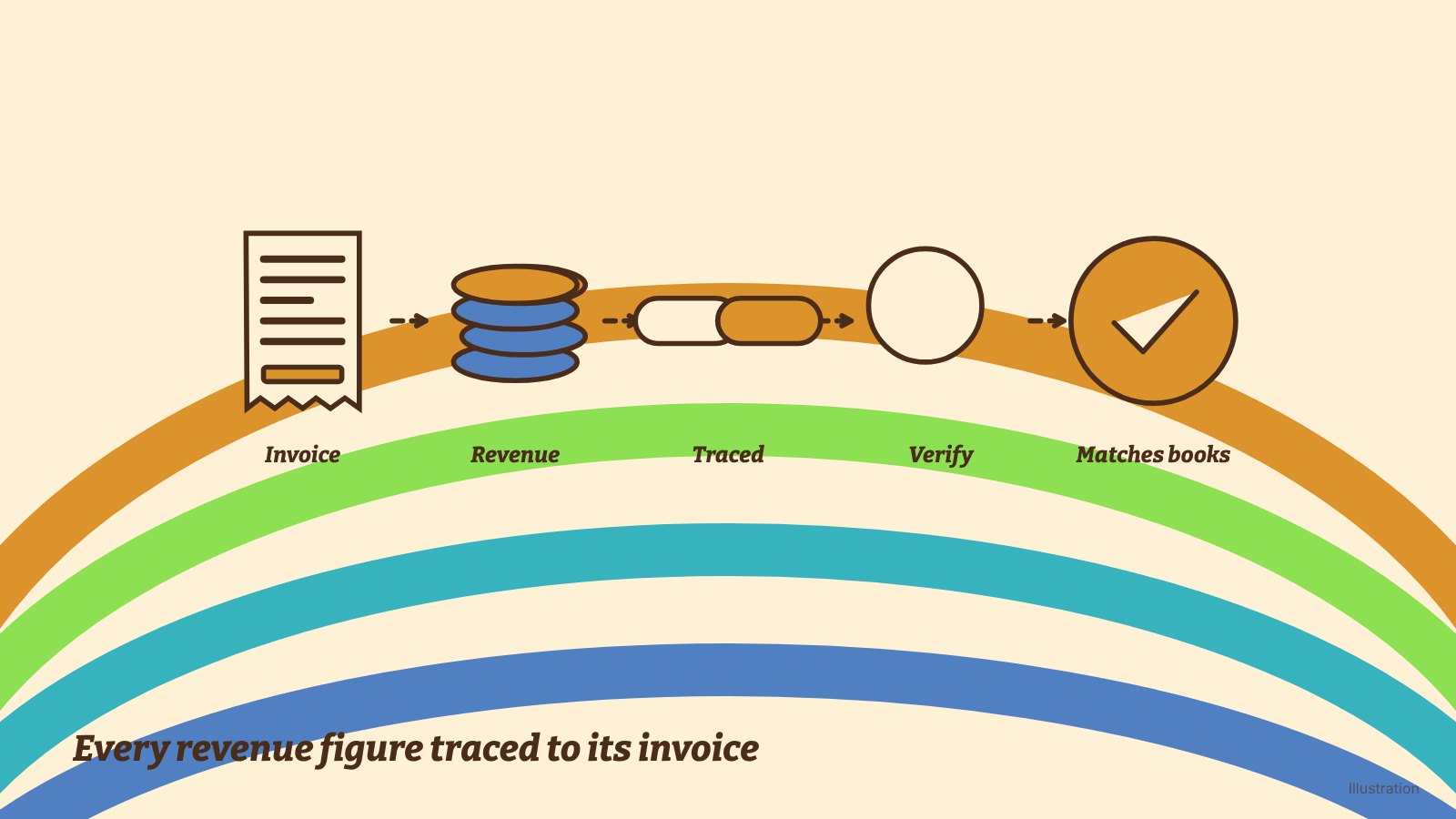
An initiative starts with a hypothesis, a business case and how its revenue will be measured. It can't be submitted without the last two.
- Someone who didn't propose it approves it, within their limit.
- The owner runs it, ticks off milestones and records what it actually gained, with evidence.
- Then someone other than the owner verifies it.
Only verified revenue is counted, and the verification goes into the decisions log next to the approval.
Commercial opportunities (cross-sell, upsell, new segments, win-backs) sit alongside, along with go-to-market plans and partners.
Pricing changes with a review
A pricing change records the current price, the proposed price, why, and what must not get worse. It's approved by someone else, goes live, and is closed only with a review of the effect it actually had.
An assistant that shows its working
Ask about coverage, attainment, renewals at risk or how each seller is doing, and the answer is calculated with no AI.
Ask how to close the gap to target, and the AI CRO writes an answer from numbered figures: bookings, pipeline, coverage, efficiency, customers, signals, initiatives and decisions. Every point cites them, uncited points are dropped, and any number that isn't in the figures is flagged.
Scenarios and the quarterly review
Change the win rate, add pipeline, change deal size or churn, and see expected bookings for the quarter and the contract base a year out, per currency, labelled as estimates. The revenue review puts the whole quarter on one calculated page for your business review.
A worked example, start to finish
Here's how the same company runs its win-back campaign through the AI CRO the following year.
January, week 1. The head of customer marketing, Owen, opens Initiatives → New revenue initiative:
- Hypothesis: former customers who left for price reasons in the last 18 months will return for a 12-month discounted re-entry plan.
- Business case: 140 eligible former accounts; if 10% return at an average of $9,000 a year, that's about $126,000 a year.
- How revenue will be measured: first-year contract value of win-back accounts that sign through the campaign, excluding any account already in active talks before launch.
- Baseline: in the previous six months, 2 former customers returned without a campaign.
Week 1, Thursday. He marks it assessed and submits it. The VP of finance, who didn't propose it, approves it within her limit. The decision is logged.
February–April. Owen starts it and ticks off milestones: list built, offer approved, campaign sent, follow-ups done. The pricing change for the re-entry plan goes through its own approval: current price, proposed price, why, and what must not get worse (no existing customer may move to the re-entry plan).
May. He moves the initiative to measuring and records what it gained: 11 accounts returned through the campaign, $97,000 a year, with the list of signed contracts as evidence. One returning account was already in talks before launch, so it's excluded, as the method says.
June. The revenue operations lead, not Owen, verifies it. She checks the contract list against the CRM and the exclusion rule. Verified revenue: $97,000. It goes into the decisions log next to the approval.
June, pricing review. The re-entry plan's pricing change is closed with its review: 11 returns, no existing customers moved to it, and a 92% first-renewal intent from the returning accounts' CSMs. The review is recorded.
Quarter end. The revenue review page shows bookings, attainment and coverage, the signals, and the initiatives: Win-back campaign: $97,000 verified. In the board pack, every initiative figure is verified, and the ones still measuring say so.
Board meeting. The former CFO asks how the $97,000 was calculated. Owen opens the initiative: the method, the evidence, the exclusion and who verified it.
Five more real-world scenarios
1. An initiative with no measurement method
Situation. A sales leader wants to submit "Enterprise push" with a business case but no method.
How TR handles it. It can't be submitted without a business case and how revenue will be measured.
2. The owner verifies their own result
Situation. The partner programme's owner tries to verify its revenue.
How TR handles it. It's refused. Someone other than the owner verifies it.
3. A pricing change never reviewed
Situation. A price increase went live three months ago.
How TR handles it. It stays open until someone records a review of the effect it actually had, including downgrades.
4. A quick coverage question
Situation. The CEO asks whether next quarter has enough pipeline.
How TR handles it. Coverage is calculated with no AI, per currency.
5. An AI answer with an invented number
Situation. A draft answer says "the mid-market team will add $600K next quarter".
How TR handles it. The number isn't in the figures, so it's flagged. Uncited points are dropped.
Before and after
Before. $1.4M "added", counted by each owner with their own method, and nobody who checked.
After. Initiatives with a method decided up front, approved by someone else, measured with evidence and verified by someone other than the owner; pricing changes reviewed; and an assistant that cites every figure.
How to tell it's working
- Every initiative has a measurement method before it starts.
- Board figures are verified, or clearly labelled as still measuring.
- Pricing changes close with a review, not just a launch.
- AI answers cite their figures, and flagged numbers are questioned.
Who it's for
- CROs and revenue leaders who report to boards.
- Finance and revenue operations who need numbers they can check.
- Marketing, partnerships and sales leaders who run initiatives and want credit that holds up.
How it fits with the rest of TicketResolve
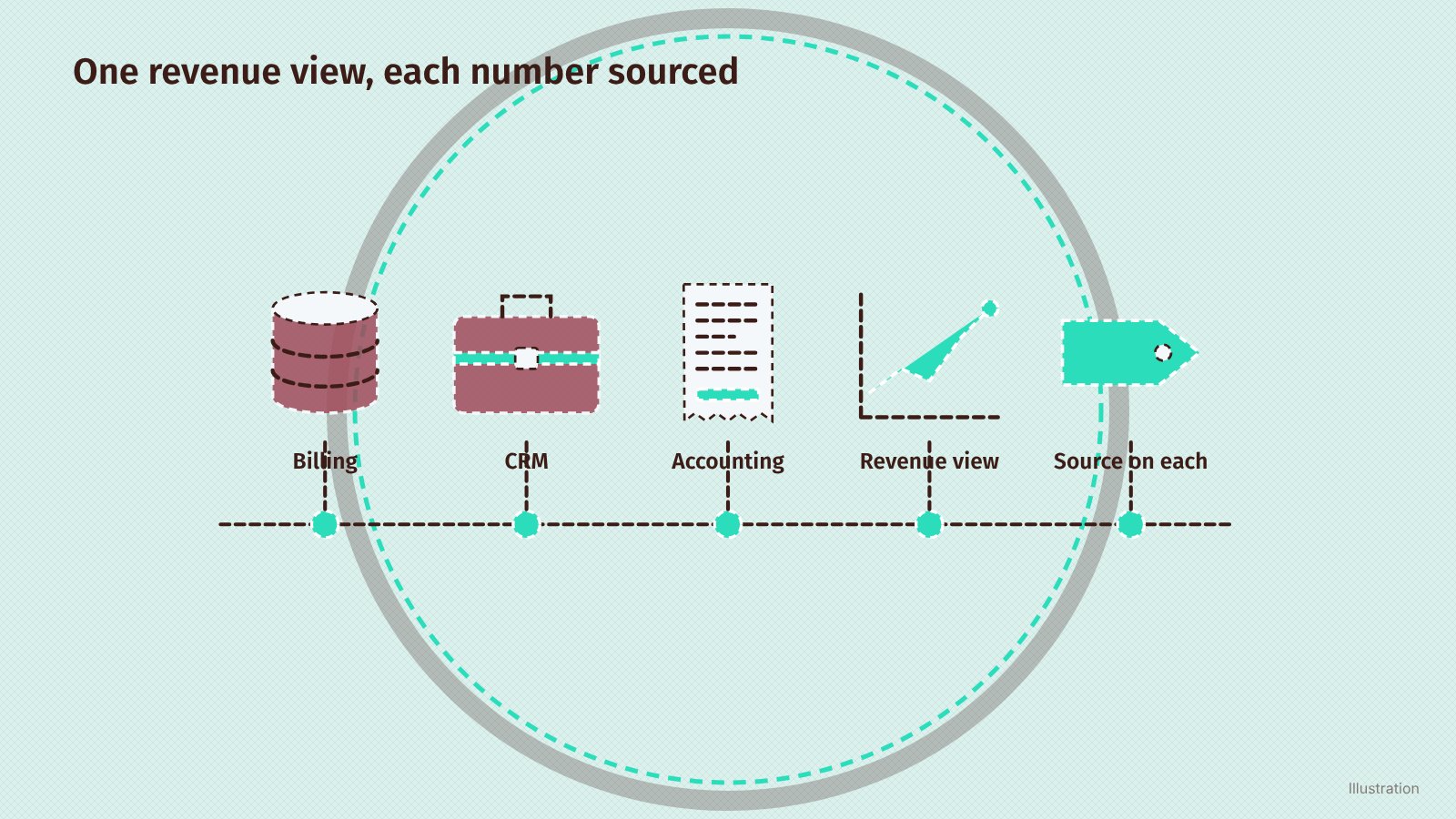
The AI CRO reads deals from RevOps Intelligence, customers from Customer Success and invoices from Billing Intelligence. With this release, the AI Chief Revenue Officer is complete.
Mistakes to avoid
- Writing the measurement method after the results. Decide it before you start.
- Counting full contract value when you meant first-year value. Say which in the method.
- Skipping exclusions. Deals already in progress shouldn't count.
- Treating scenarios as forecasts. They're labelled estimates.
Do it in TicketResolve, step by step
Where: AI Chief Revenue Officer → Initiatives, AI CRO and Scenarios (/dashboard/cro/initiatives). You'll need: a CRO seat, and a colleague with approval rights within the initiative's limit. Full guides: From a revenue idea to verified revenue and Running the quarter.
- Check the sources. Deals come from RevOps Intelligence, customers from Customer Success and invoices from Billing Intelligence. A source with no data shows as not connected.
- Set targets. Targets → a quarter, what it measures, the seller or the whole team, and the amount. Nobody sets their own.
- Record the initiative. Initiatives → New revenue initiative: the hypothesis, business case, plan, how the revenue gained will be measured and the baseline.
- Get it approved. Mark it assessed and submit it. Someone else approves it within their limit; the decision is logged.
- Run and measure. Start it, tick off milestones and move it to measuring, then record the revenue gained a year and the evidence.
- Verify. Someone other than the owner verifies the outcome. Only verified revenue counts.
- Review pricing changes. Record the current and proposed price, why and what must not get worse; after launch, close it with a review of the effect.
- Ask and model. AI CRO → ask a question; Scenarios → change win rate, pipeline, deal size or churn to see the effect per currency.
- Run the revenue review. One calculated page for the quarter.
How to check it worked: the revenue review lists each initiative as verified (with its verifier) or still measuring, and no figure appears without its method.
With this release, the AI Chief Revenue Officer is complete. It's $149 per CRO seat a month and in the 7-day free trial.
Frequently asked questions
Can an initiative start without a measurement method? No. It can't be submitted without a business case and how its revenue will be measured.
Who verifies an initiative? Someone other than the owner.
Does unverified revenue count? No. Only verified revenue is counted.
When is a pricing change closed? Only with a review of the effect it actually had.
Does the AI answer coverage questions? No. Coverage, attainment, renewals at risk and seller performance are calculated with no AI.
What happens to AI points without a source? They're dropped, and numbers not in the figures are flagged.
Are scenarios forecasts? No. They're labelled as estimates, per currency.
Who sets targets? Not the person they apply to. Nobody sets their own.
Explore Topics
Written by
Ghulam Shabbir
Content creator and writer sharing insights and stories.